Showing posts with label Voting Rights. Show all posts

Monday, February 16, 2015

Moral Mondays’ Barber Says America’s Political System Suffers From a ‘Heart Problem’

Saturday’s Moral Mondays march once again brought a multicultural crowd of thousands to Raleigh, N.C., protesting budget cuts and voting restrictions enacted by the state’s Republican Legislature.

Planned Parenthood Federation of America President Cecile Richards and NAACP National President Cornell Brooks (far right) listen to the North Carolina NAACP’s the Rev. Dr. William Barber speak at the Moral Mondays march in downtown Raleigh, N.C., Feb. 14, 2015.

By David Swerdlick
The Root

Raleigh, N.C., Saturday, Feb. 14: An African-American Muslim imam, Oliver Muhammad, offered the call to prayer; members of black Greek-letter fraternities served as event marshals; and as marchers in North Carolina’s Moral Monday movement began their walk across downtown Raleigh, the state’s capital, Chapel Hill Town Council member Maria Teresa Palmer announced—in Spanish—that “interpreters will be available at the intersection of Hargett and Fayetteville.”

It’s that kind of come-one, come-all event. And even though this year’s ninth annual march wasn’t as big as last year’s—one that The Nation’s Ari Berman reported as “the largest civil rights rally in the South since the Selma to Montgomery march in 1965”—organizers again brought together a diverse coalition of activists on a chilly Valentine’s Day to protest what movement leader and state NAACP President the Rev. Dr. William Barber II described as the state’s—and the nation’s—“heart problem.”

And while the Moral Mondays movement is left-leaning, Barber told supporters that he wanted them to be political “defibrillators” because “we find we’ve got, not a left problem or a right problem or a conservative problem or a liberal problem. We’ve got a heart problem. When money and greed and political hubris and pride and ego and beating your opponent become more important than working together to uplift humanity, we’ve got a heart problem.”

For the movement, the stakes haven’t changed.

Barber called on legislators to “fund Medicaid expansion, raise the minimum wage, index it with inflation—put it on the ballot and let the people vote,” as well as “restore cuts to public education,” reject “the attacks on women’s health and environmental protection, repeal the death penalty, reform the criminal-justice system,” enact “fair immigration reform, and respect the constitutional rights of all humanity, regardless of race, creed, color and sexuality.” (Continued)

Read More...

Tuesday, February 10, 2015

If Voting Means Little, Why Is the Right Working So Hard to Suppress It?

Selma and Shelby: The Fight for the New South

BY JESSE JACKSON
Progressive America Rising

Feb 10, 2015 - What time is it?  It’s important to be clear.  Is it mid-day and our labors still have hours to go?  Or is it evening, our work done, and we can rest our weary heads?  What time is it for the New South?  Is it time to celebrate Selma, Alabama – and the triumph of the Voting Rights Act?  Or is it time to mourn Shelby, Alabama – and the radical backlash against voting rights?

Fifty years after Selma’s Bloody Sunday that led directly to the passage of the Voting Rights Act, many will gather to celebrate that victory.  But we should understand that our work is not done. With the Shelby decision of the Supreme Court, the struggle for equal rights must go on.

Too often, we remember the triumph and ignore the backlash.  In 1870, the 15th Amendment, codified in in the blood of the Civil War, was ratified to give African Americans the right to vote.  It declared that the right to vote shall not be denied “on account of race, color or previous condition of servitude.”

But the triumph was immediately challenged by the backlash.  Across the South, states controlled the structure and laws of voting.  They immediately set up seemingly neutral barriers to voting – poll taxes, literacy tests and more – that were used to disenfranchise black voters.  The reconstruction of the South was ended as the Supreme Court ratified legal apartheid, and segregation was brutally enforced.

It took nearly a century, a mighty civil rights movement, Bloody Sunday and other sacrifices, to pass the Voting Rights Act that gave the Justice Department the right to pre-screen any changes to voting laws in states with a history of discrimination, and ban those that would have a discriminatory effect, even if they looked neutral on their face.

Two years ago, however, in the case of Shelby County v. Holder, the five conservative judges on the Supreme Court effectively gutted preclearance laws, arguing in essence that there as a new South that had moved beyond racism.

Read More...

Wednesday, November 5, 2014

A Few Quick Thoughts on the November 4Th Election

By Bill Fletcher, Jr

http://billfletcherjr.com

(1) There is almost always a low turnout during a midterm election and the party which controls the White House tends to lose.  This is definitely true but should not let us off the hook.

(2) The Democratic base largely stayed home except in certain important races, such as in North Carolina.  I think that we have to face the reality that the base that would be expected to vote Democratic was dis-spirited.  It is not just the ads that the Republicans ran.  The Obama administration has not led in a progressive direction.  There are certainly some major accomplishments, but there had been great expectations by many that after the 2012 election he would come out swinging.  I never had such expectations, but many people did.  Instead the administration continued to be stuck in various crises but also was not articulating a clear direction.  The Republicans were able to make Obama out to be the problem despite certain important facts, e.g., the economy has improved; troops had been pulled out of Iraq.

(3) Though the economy has improved, the condition for the average working person has not.  Yes, unemployment is down but we are still dealing with structural unemployment that is weighing on everyone.  The damage from the foreclosure crisis is far from over.  And the rich are the ones who are benefiting from the improved economy.   To turn any of this around masses of working people need to be organized to fight for a division of the wealth.  Yes, that means building and supporting labor unions.  But when the President does not make that a clarion call–except when speaking with union members–he has no answer to the public that is asking for their share.

(4) Race, as always, was a factor.  The Republicans had sufficient codes to make it clear that race was an issue in the election.  Discussions about Obama allegedly being prepared to open up the flood gates to immigrants is a case in point.  But there were many other messages.  Once again, the Republicans have positioned themselves as the “non-black party.”  Race arose in some additional and odd ways.  The Ebola crisis, for instance, was tinged with a racial cover.  The fear and panic associated with it and blaming it on Obama!

(5) This election was about money…but also not:  This was the most expensive midterm in history.  Yet it was not a guarantee that one would win if there was money on the table.  The Democrats, in various races, sunk in a great deal of money.  So, we cannot put it all on that.  Money, however, plus motivation can make one VERY bit difference.

(6) The Democrats keep falling back into running technocrats.  While this was certainly not the case in every election, it was striking that there is this default position of channeling Michael Dukakis ’88 and suggesting that one is a good candidate because one can run the trains on time.  Instead of positioning as an advocate for the people, and especially the people who are being squeezed, too many Democrats were running as technocrats and bi-partisan healers.  Yet this, in part, relates to money.  If you cannot run a campaign without goo-gobs of money, it is more difficult to run as a progressive populist.

(7) Progressives need to support and create organizations that are fighting for political power at the local and state level.  We need formations (which i have called “neo-Rainbow”) that can identify and train candidates; build bases; take on initiatives and referendums; and run our candidates either in Democratic primaries or as independents, depending on the tactical situation.    This brings with it a series of major challenges not the least being accumulating resources.    There is no easy answer to the resource question but one thing that is certain is that building the sorts of organizations i am referencing, e.g., Virginia New Majority, Florida New Majority, Progressive Democrats of America, will necessitate around the clock resource accumulation, including but not limited to fundraising.  We will NEVER have the funds of the Koch brothers so we need to get over that and think about the strategies, tactics and organizational forms necessary and appropriate to an asymmetric situation.

Read More...

Thursday, October 23, 2014

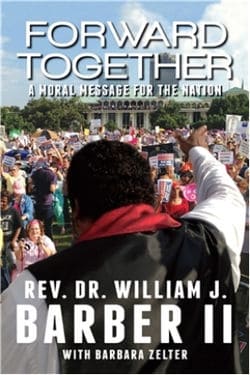
Rev. William Barber’s New Book Reminds Us Why We Must Vote


441_Forward_TogetherBy Terrance Heath

Progressive America Rising via Ourfuture.org

Oct 22, 2014 - With Election Day just two weeks away, the words of Paul Wellstone Citizen Leadership Award  recipient and Moral Mondays movement leader Rev. William Barber remind us, “If we ever needed to vote, we sure do need to vote now!” His new book reminds us of the moral power of progressive values when we march “forward together.”

Rev. Barber’s words come from his 2012 address to the NAACP, but as timely as ever with so much at stake in this election, as Denise Oliver Velez writes:

Election Day 2014 is on Tuesday, November 4, a little over two weeks away. This election will make a profound difference in the lives of many of our citizens. For some, it is a matter of life and death—given the refusal of some states to accept Medicaid expansion. We are all too aware of right-wing extremist efforts in many of those same states to suppress the vote, and to construct obstacles to voting.

One of the most powerful voices in the nation, fighting to mobilize a broad-based coalition of social activists to fight voter suppression, is that of the Rev. Dr. William Barber II. What is disconcerting is that with only a few exceptions, the major traditional media have managed to ignore his voice and the Moral Mondays movement he is leading—from his home base of North Carolina, to as far north as Wisconsin.

How did much of the press manage to ignore 80,000 people who marched in Raleigh, North Carolina, back in February?

While the traditional media is willing to pay homage to Martin Luther King Jr. and Rosa Parks in memorials and tributes, journalists are far too willing to pretend that the civil rights movement was buried with Dr. King. Contrary to those who speak as if the movement ended in 1968, it is alive and growing. Blacks, whites, Latinos, Asians, Native Americans, women and men—straight and LGBT, religious and non-religious, young and old—have come together in a breathtaking and extraordinary fusion movement, Moral Mondays, spearheaded by the Rev. William Barber, head of the North Carolina NAACP. His book about that movement, Forward Together: A Moral Message for the Nation, is being released by Chalice Press November 1.

Just in time for the election, Rev. Barber’s new book from Chalice Press, Forward Together: A Moral Message for the Nation, recalls the beginnings of the historic Moral Mondays movement, puts progressive values in a moral context we can take with us into the voting booth.

Last summer, after seven years of grassroots organizing, “Moral Mondays” grabbed the nation’s attention as thousands protested North Carolina’s General Assembly in Raleigh in support of the poor, voting rights, health care, immigrant rights, and other issues. Over 13 consecutive weeks, the protests against legislative extremism resulted in the arrests of nearly 1,000 people, making it one of the largest acts of civil disobedience in U.S. history. As thousands more gathered in support each Monday, Barber, president of the North Carolina chapter of the NAACP, became widely recognized as the leader of a new civil rights movement in the South. More than 100 “Moral Monday” connected events have since taken place, and the spirit of the movement has spread to Georgia, South Carolina, Virginia, Alabama, Arkansas, Missouri, Wisconsin, and New York. This reflection on the movement’s beginnings introduces Barber, the sources of his courage from both a biblical imagination for justice and a deep connection to “fusion” civil rights history, and the inspiring story of the Southern freedom movement’s revival.

Barber invites readers into a big-tent, faith-based movement for justice that has room for black, white, and brown, gay and straight, rich and poor, old and young, Republicans and Democrats, people from all walks of life. Offering his unique analysis of what he has called the “Third Reconstruction,” Barber locates North Carolina’s struggle in the spiritual and political landscape of 21st-century America. With civil rights and social justice battles with a deep moral narrative, particularly in southern statehouses that then move to federal courts on appeal, what happens in North Carolina can shift the center of gravity in political discourse, debate, and decision—and thereby change the nation.

“Messages of moral dissent are designed not to just be spoken and heard but to shape the prophetic consciousness of a movement and of society,” says Barber. “The prophetic voice rises when government systems and sometimes even religious systems have abdicated their responsibility to the least of these. When the forces of extremism have become so overwhelming and have depressed the hope of the people, the prophetic voice and mission is to connect words and actions in ways that build restorative hope so that there can be a movement for restorative justice. So this book is an attempt to capture the practice of ‘preaching’ in the public square, which is where prophetic inquiry and critique must function.”

Check out Rev. Barber’s book when it drops on November 1st and take his message into the voting booth on November 4th!

Read More...

Tuesday, October 14, 2014

The 2014 elections and the ‘Second Great Disenfranchisement’

By David Schultz

Progressive America Rising via Twin Cities Daily Planet

Oct. 12, 2014 - Elections are supposed to be the way people select their leaders. Increasingly that is no longer the case. The courts now occupy an enormous role in determining the outcome of elections–even before they start. That is clearly the case this year where too often the goal has become to rig elections by making it harder for some, especially people of color, the poor, and the young, to vote. This especially seems to be the strategy of Republicans who continue to push the Second Great Disenfranchisement in American history.

Consider what is happening across the country right now, with less than a month before the election and early voting already taking place in many states.

The U.S. Supreme Court upheld Ohio’s curtailment of early voting which was adopted by Republicans, after a federal district court and a court of appeals stayed the law. Republicans in Wisconsin pushed through a strict voter ID law and just in the last few days the Supreme Court has enjoined its enforcement for this election. Suits are challenging limits passed by Republicans in North Carolina limiting on same day voter registration and a ban on counting ballots from incorrect precincts. And in just the last few days a federal judge enjoined a voter ID law in Texas that would have disenfranchised over 600,000 voters, especially impacting African-Americans and Latinos. This law too was pushed by Republicans including the state’s governor Rick Perry.

In all of these cases it is Republicans pushing to shrink the electorate, to make it more difficult for people of color, the poor, and young to vote. If the First Great Disenfranchisement came after Reconstruction ended in the 1870s, we are now witnessing the Second Great Disenfranchisement. The former ushered in the era of Jim Crow, polls taxes, literacy tests, and grandfather clauses as tools to deny African-Americans the right to vote. Today claims of voter fraud and measures such as voter ID, long voting lines, eliminating early voting, and the gutting of the Voting Rights Act are the tools to accomplish the same.

Republicans generally are advocating limits on voting, depressing voter turnout even more during midterms elections when Democrat-leaning voters are less likely to show up. This seems to be part of a national strategy to rig elections in their favor. In some states, such as Wisconsin and North Carolina, these curtailments of voting rights could make a serous difference in who wins as governor or the US Senate, and ultimately which party might control the Senate.

But even beyond legal efforts to disenfranchise, another one is occurring. Nationally, perhaps only around 38-40% of those eligible to vote this year. Young people, people of color, and the poor are especially likely to stay home. Yes it may be true that neither of the major parties offers any alternative or real choice for these people, but still one should vote. Vote even if it means writing in a candidate of your choice. Show up, vote, and use it as a protest vote if needed. Get in the habit of showing up and demonstrating to the two parties that your voice matters and it should be considered.

A lot of blood and energy was spent in the passed to get the young, people of color, and the poor the right to vote. Don’t waste those past efforts. Remember, there are many people who don’t want you to vote and who did not want your ancestors to vote. Voter ID laws and other legal restrictions are bad but it is even worse if you decide not even to bother to show up.

Read More...

Wednesday, April 2, 2014

Democracy vs. Oligarchy

By Senator Bernie Sanders

Progressive America Rising via Daily KOS

In his 1943 painting "Freedom of Speech," Norman Rockwell illustrated American democracy in action by depicting a man speaking up at a town meeting. A framed poster of Rockwell's painting hangs proudly on a wall in my Senate office in Burlington, Vt.

Since 1990, when I was first elected to Congress, I have held hundreds of town meetings in almost every community in Vermont. Just this past Sunday I held a town meeting in Middlebury, Vt., with a video connection to meetings in three other towns. At these town meetings I listen to what my constituents have to say, answer questions and give a rundown of what I'm working on and what's going on in Washington.

This process -- an elected official meeting with ordinary citizens -- is called "democracy."

Ironically, at the same time as I was holding town meetings in Vermont, a handful of prospective 2016 Republican presidential candidates (Jeb Bush, John Kasich, Chris Christie and Scott Walker) trekked to Las Vegas to audition for the support of Sheldon Adelson, the multibillionaire casino tycoon who spent at least $93 million underwriting conservative candidates in the last election cycle. Those candidates were in Las Vegas for the sole purpose of attempting to win hundreds of millions from him for their presidential campaigns.

The disastrous 2010 Supreme Court ruling in Citizens United threw out campaign funding laws that limited what wealthy individuals and corporations could spend on elections. Since that ruling, campaign spending by Adelson, the Koch brothers and a handful of other billionaire families has fundamentally undermined American democracy. If present trends continue, elections will not be decided by one-person, one-vote, but by a small number of very wealthy families who spend huge amounts of money supporting right-wing candidates who protect their interests.

This process -- a handful of the wealthiest people in our country controlling the political process -- is called "oligarchy."

The great political struggle we now face is whether the United States retains its democratic heritage or whether we move toward an oligarchic form of society where the real political power rests with a handful of billionaires, not ordinary Americans.

Clearly, if we are to retain the fundamentals of American democracy, we need to overturn the Supreme Court decision. The fact that more than 500 communities and 16 states have expressed support for overturning Citizens United is a good step forward, but much more needs to be done.

Overturning Citizens United, however, is not enough. If we are serious about elections being fought over ideas, we must move toward public funding of elections.

Read More...

Sunday, February 23, 2014

Good Turnout Needs a Left Turn, Not a Few Bones

Obama focuses on rallying Democratic base

By Karen Tumulty

[Progressive America Rising via The Washington Post

Feb 22, 2014 - WASHINGTON -- President Barack Obama is stepping up his efforts to coalesce and energize the Democratic base for the 2014 elections, backing off on issues where his positions might alienate the left and more aggressively singling out Republicans as being responsible for the country's problems.

Voter turnout in midterm elections tends to be much lighter than it is in years when the country is picking a president, which means that it is crucial to maximize the enthusiasm of the party stalwarts who are most likely to show up at the polls.

That helps explain why, in several sensitive policy areas, Mr. Obama recently has moved to defuse tensions with his fellow Democrats.

Liberals are celebrating the president's decision not to include a proposal to trim Social Security benefits in his 2015 budget, abandoning his previous stance in favor of making that part of a larger "grand bargain" to bring down the national debt.

And while the White House insists that it will continue to press Congress for more authority to negotiate trade deals -- something that puts the administration at odds with the Democratic base, and with its own party's congressional leaders -- Vice President Joe Biden this month signaled to House Democrats that it has no expectation that will actually happen.

Nor is the administration showing much appetite for bringing about a resolution to the question of allowing construction of the Keystone XL pipeline, an issue that pits environmentalists against unions, both of which the Democrats will be counting on in November. A Nebraska judge's decision on Wednesday rejecting the pipeline route in that state has raised the possibility that a decision may be delayed until after the election.

There remain some areas where Mr. Obama is at odds with key Democratic constituencies. For instance, he has resisted calls to reconsider policies that have resulted in a record number of deportations of illegal immigrants. Administration officials argue that easing up could undermine the president's larger goal of overhauling immigration laws.

White House officials insist that their efforts to please the Democratic base do not conflict with appealing to independent and swing voters.

Obama adviser Dan Pfeiffer noted that on many economic issues -- raising the minimum wage, ensuring pay equity for women, spending more on infrastructure and clean energy -- polls show most Americans share the Democrats' views.

"The position that is popular with the progressive base is the mainstream position," Mr. Pfeiffer said.

As he seeks to rally the Democratic base, Mr. Obama -- who will never again have to face voters himself -- is striking a more combative and partisan tone.

Read More...

Wednesday, August 28, 2013

Movement Envy: Chicago Looks at North Carolina

Protesters rally during "Moral Monday" demonstrations at Halifax Mall near the General Assembly in Raleigh, N.C., in July. More than 1,000 people have been arrested while protesting against policies being enacted by the North Carolina General Assembly. (AP Photo/Gerry Broome)

By Susan Klonsky

I admit it. We have a great movement here in Chicago, but still, I'm jealous of Mondays in North Carolina.

Reviving the spirit and moral compass of the Civil Rights Movement of the ‘60s, protest has become the Monday Lifestyle in NC.  People  put their Monday evening rallies on the calendar. “Mon. 5:30 pm:  Sit in, get arrested @ State Capitol.” It’s becoming sort of normal.

For the past 4 months in Raleigh, every Monday  is Moral Monday. Late in the day, as people get off work, they surround the Statehouse with rings of protesters. Mass arrests are scheduled, followed on Thursdays by well-organized press conferences by those arrested.  Every Monday the protests get larger—now exceeding 15,000 in Raleigh, with big rallies throughout the state. The movement is multiracial and has spread well beyond North Carolina’s capital out to the mountainous west of the state, to small towns and tiny hamlets.

Reverend Dr. William Barber

The leader of this movement is a Disciples of Christ minister, the Reverend Dr. William Barber III.  I had the pleasure of meeting Rev. Barber earlier this week. He is the latest in a bloodline of activist pastors who have fought racial segregation and its ugly siblings, poverty and violence, for generations. Rev. Barber, a giant of an orator, is the state chairman of the North Carolina NAACP. With the NAACP as its nucleus,  the Moral Monday Movement is an expansive coalition embracing an impressive number of organizations in all fields, labor unions, religious congregations, professional societies, and even fraternities and sororities. And they are on a roll.

“We’ve got a strategy. We never expected this thing to take off as it has. But we had to sit down and say, ‘where are we going with this?’” Barber explains. “We started off with one rally, and now we’re at the point of having 13 mass rallies in all 13 Congressional districts across the state. We’ve even had one of the county Republican party chairs renounce his own party,” as the result of the backward legislation the GOP has rammed through the North Carolina Legislature.

The Moral Monday folks have put their heads together and done the math. They’ve cooked up a plan for retaking the Democratic majority in the North Carolina Legislature and the state’s Congressional delegation. To accomplish these objectives will require a massive voter registration effort designed to boost the percentages of African American registered voters as well as a one-percent shift of white voters away from Republican candidates.

More than 1,000 arrests for civil disobedience.

The plan involves mass participation in voter education and mobilization. Unions and professional societies will play a big part, by having their members trained to register voters (and to deal with the new and exceptionally stringent, obstructive regulations about voter identification). “If each of us does 50 registrations, we can make our goal of 45,000 new voters,” Barber explains. “That’s why we must start now. It’s totally attainable.”

I asked Rev. Barber if he feels they can keep these Monday events going indefinitely. He explained that they are building for a few major events this winter. In particular, in December when the remaining major cutbacks to Medicaid in the state kick in, and again in January, he expects an uptick in mass protest against the attacks upon public education, social and health services, including reproductive rights, and state aid to the poor and unemployed.

Last month, Barber told us, the movement spread to some of the whitest, most heavily Republican parts of the state, where the Tea Party had until recently held sway. Now that people are beginning to experience the impact of budget slashing including removal of protections for teachers and other public employees, the picture is changing. “We were invited to speak up in rural Mitchell County, way up in the mountains,” Barber said, “and we found ourselves at a church way up there, in the evening, with at least a thousand people—an all white crowd—waiting for us.”

It used to be  Klu Klux country up there, and Reverend Barber admits he was somewhat apprehensive about what kind of reception he might receive.  He was greeted by the assembled joining together to sing Blessed be the tie that binds/Our hearts in Christian love.  “They were  fired up for Moral Monday.”

What brought them out, at least in part, Barber observed, was the attacks upon teachers. “They have 17 or 18 percent unemployment up there. And the schools are some of the biggest employers in these counties, and now they are having to lay off school personnel because of the state budget cuts to education. Plus, there is no more tenure or job security at all for them. A man got up at that meeting and declared, ‘When they hurt education, they really hurt us mountain people.’”

Moral Monday has lots of religious participants. But it is not a religious movement. “For me, this is a fight to uphold our deepest Constitutional, Biblical and faith values,” says Barber. It is many things to many people. At public meetings throughout the state, people testify to their worries, anger and intention to be part of the fight in North Carolina.

The issues draw them together:

Voting rights, health care, education, jobs and poverty. The movement stands in defense of  LGBT rights including marriage equality. How does Moral Monday deal with religion and religious differences? “We are tired of the Christian Right which is so wrong trying to dominate the moral high ground,” Barber explains. “We challenge them:  Are you really ready for a moral debate? Are you ready to defend what you have done?  Of course they don’t want to debate. It most certainly is a moral issue. Cutting people off from health care, from their jobs, taking food off their tables. They have no integrity and they hide from debate.”

The budget slashing and violations of basic civil rights are shaped by the ALEC agenda--the same ALEC which we protested less than 2 weeks ago in Chicago. The same ALEC which designed Florida’s murderous “Stand Your Ground” law.  These people are extremists, Barber emphasizes. Their policies are dangerous. And people are beginning to see them for what they are.

At the core of the Moral Mondays movement is a strong principle of anti-racism. It is impressive to witness this principle beginning to penetrate a broad swath of the population, as people come together to win back the rights that have been violated and denied.

Yes, we have a great movement here in Chicago, but I’m still a little jealous.

Read More...

Wednesday, July 24, 2013

From the Deep South to the Midwest, a Generation Demands Justice


Members of Dream Defenders sit-in at Rick Scott’s office. (AP Photo)

From Student Nation at The Nation, July 23, 2013

E-mail questions, tips or proposals to studentmovement@thenation.com. For earlier dispatches, check out posts from January 18, February 1, February 15, March 1, March 15, April 2, April 15, April 26, May 10, May 24, June 7, June 21 and July 9.

1. Dream Defenders Occupy the Florida Capitol

On Saturday, July 13, George Zimmerman was found not guilty. This was the moment Florida showed the world that it does not care about its youth, especially young black and brown people. If neighborhood watch vigilantes are given the license to kill, what instructions are given to black and brown youth such as me? How do I stand my ground when I feel threatened? Am I not allowed to defend myself? Dream Defenders have been joined by community members and students from Jacksonville, Gainesville, Orlando, Miami, FAMU, FSU, UF, FAU and UCF, as well as the Advancement Project, Power U and USSA. We are occupying the state capitol until Governor Rick Scott meets our demand to convene a special session of the legislature. During this session, we want a new Trayvon Martin Civil Rights Act to be passed. It will focus on the Stand Your Ground law, racial profiling and the war on youth. This is deeper than just the Zimmerman murder case. This is a movement to unravel the system that allowed Trayvon to be criminalized, profiled and killed in the first place. We will stay in the capitol until the governor meets our demands. We have gotten support from across the country and around the world. This is what the student movement looks like.

—Melanie Andrade

2. Black Youth Strategize in Chicago

Black Youth Project 100 is a group of 100 young black activists from across the country convened by the Black Youth Project to mobilize communities of color beyond electoral politics. As we convened for our first Beyond November Movement gathering, we collectively mourned over the Zimmerman trial verdict and produced this video response to affirm the humanity of black life. We are committed to connecting the tragic loss of Travyon Martin and this recent miscarriage of justice in Florida to countless other examples of American systemic racism and injustice. Moving forward, we will be mobilizing a black youth contingency to attend the commemoration of the fiftieth anniversary of the March on Washington and offering civic engagement training to young people. We are organizing local chapters to build political power nationwide while simultaneously supporting the efforts of other youth-led organizations such as Dream Defenders. As stated in our video, we see the hopelessness of a generation that has been broken trying to find its place in this world, and we understand that we need to turn anger into action and pain into power.

Read More...

Wednesday, June 26, 2013

The Right’s War on Democratic Rights

By Tom Hayden

Progressive America Rising

With the fiftieth anniversary of the 1963 March on Washington approaching, is the time at hand for mass protest and civil disobedience against the Republican/Tea Party's war against voting rights and immigrant rights?

That's among the immediate questions as the Roberts Court has dropped its hammer on the 1965 Voting Rights Act while a dubious "immigration reform" bill passed the Senate on its likely way to an even worse fate in the Tea Party-controlled House. Together with the Court's Citizens United decisions protecting secret money in campaigns, Republicans are doing everything possible to cement a grip on power as a numerical white minority bloc. Successful Republican efforts to gerrymander House seats to gain ground in the Electoral College, combined with the rising tide of anti-abortion restrictions in southern states, reinforce the drift towards a new civil war - one fought by political means with recurring episodes of mass violence. The Court's narrowing of affirmative action also guarantees a widening of the racial divide in education and economic opportunity.

The Court's composition reveals its underlying partisan character, with the decisive tilt occurring after the 2000 election between Al Gore, Ralph Nader and George Bush, in which the Court usurped the verdict of a majority of voters, thus becoming a de facto branch of the Republican apparatus. The Republican bloc now includes: Roberts [Bush, 2005], Alito [Bush, 2006], Scalia [Reagan, 1986], Kennedy [Reagan, 1988], and Thomas [Bush, sr., 1991]. The Democratic bloc includes Ginsberg [Clinton, 1993], Stephen Breyer [Clinton, 1994], Sonia Sotomayer [Obama, 2009], and Elena Kagan [Obama, 2010]. The Republican tilt is likely to continue indefinitely, with Obama only able to appointment replacements to retiring liberals. The tilt will become a lock if a Republican president is elected in 2016.

Lost in both the partisan spin and rhetorical legalisms is that the scale of political power is being tipped far to the right in spite of progressive majorities which elected and re-elected President Obama.

Read More...

Thursday, June 6, 2013

From ‘Mississippi Goddam’ to ‘Jackson Hell Yes’!

Chokwe Lumumba is the New Mayor of Jackson, Mississippi

By Bob Wing

Progressive America Rising

June 5, 2013 - Chokwe Lumumba--a founder and leader of the Republic of New Afrika, the New Afrikan People’s Organization and Malcolm X Grassroots Movement, defense attorney for Tupac Shakur and others, and a first term city councilman--is the new Mayor of Jackson, Miss.

His June 4 victory is a stirring tribute to the courageous Mississippi civil rights leader Medgar Evers who fifty years ago on June 12, 1963 was gunned down at his Jackson home.

In a stunning turn of events Chokwe defeated Jackson’s three-term incumbent and first African American mayor Harvey Johnson, the white Republican-financed young Black businessman Jonathan Lee, and others to win leadership of the city with the second highest percentage of Black people in the United States.

I was privileged to briefly participate in the victory of one of the most radical mayors in U.S. history, right in the heart of Dixie, and to glimpse a new Black-led progressive coalition that intends to fight for the state.

Nina Simone famously cussed Mississippi white supremacy in her 1964 civil rights anthem “Mississippi Goddam.”  The election of Chokwe Lumumba is now an occasion to say “Jackson Hell Yes!”

 ‘Impressed with the People’

Jackson has a partisan mayoral electoral system that allows all voters regardless of party affiliation to cast ballots in any party’s primary election. With their deep pockets and high turnout bloc voting, this so-called “crossover primary” often enables Mississippi’s ultra-conservative white voters and businessmen to influence the candidates of both parties.

Not this time. In a reversal the near unanimous financial and political support that whites gave Jonathan Lee backfired.

By depriving incumbent Johnson of their support, whites inadvertently helped Lumumba upset Johnson in the primary. And in the Lee/Lumumba runoff the full throated white backing of Lee helped most Black voters come crystal clear who he really represented in stark contrast to the powerful progressive grassroots candidacy of Chokwe Lumumba. 

Lee flaunted his deep pockets by filling the airwaves with dire warnings of Lumumba’s “militancy,” “divisiveness” and “anti-Christianity,” but a large Black majority went for Lumumba in huge percentages.

Read More...

Saturday, February 23, 2013

‘Demographics’ Are Not Simply Passive Numbers, They Also Often Rise Up and Rebel

Reflections on the 2012 Election

By Bill Fletcher, Jr.
Progressive America Rising

Feb 22, 2013 - Leading up to November 6, I found myself focused on the matter of voter suppression and electoral shenanigans committed by the Republicans. This concern was not for nothing. Prior to and on Election Day there were myriad attempts to subvert the vote, particularly the vote of people of color. Frivolous voter challenges started well before Election Day itself, again targeting African American and Latino voters.

What was most striking about the 2012 election, then, was that in the face of this attack on our right to vote, there was something akin to a popular revolt by the African American and Latino electorate. Latinos voted over 70% for Obama and African Americans over 93%. But those figures do not tell enough. It was the turnout that was so significant.

Despite efforts by the political Right to dampen African American enthusiasm for Obama, using the issue of same-sex marriage, this tactic failed dismally. And Romney’s cynical anti-Latino approach, as evidenced during this primary campaign, came back to bite him in the rear.

It was more than this, however. It was something that you had to feel if you waited in line to vote.

I went three times to try to engage in early voting.

The first two times the line was out the building and I decided to return at a later date.

On the third time, I thought I had arrived early enough only to discover that the line started well within the building. I was on line for two hours, and this was early voting.

Around the USA, there were stories like that one -- people standing in line for one to seven hours in order to vote.

Read More...

Thursday, December 20, 2012

No End to Republican Plans to Rig the Vote

The GOP's New Electoral College Scheme Includes Pennsylvania

By Reid Wilson
Beaver County Blue via National Journal

Dec 17, 2012 - Republicans alarmed at the apparent challenges they face in winning the White House are preparing an all-out assault on the Electoral College system in critical states, an initiative that would significantly ease the party's path to the Oval Office.

Senior Republicans say they will try to leverage their party's majorities in Democratic-leaning states in an effort to end the winner-take-all system of awarding electoral votes. Instead, bills that will be introduced in several Democratic states would award electoral votes on a proportional basis.

Already, two states -- Maine and Nebraska -- award an electoral vote to the winner of each congressional district. The candidate who wins the most votes statewide takes the final two at-large electoral votes. Only once, when President Obama won a congressional district based in Omaha in 2008, has either of those states actually split their vote.

But if more reliably blue states like Michigan, Pennsylvania, and Wisconsin were to award their electoral votes proportionally, Republicans would be able to eat into what has become a deep Democratic advantage.

Read More...

Wednesday, November 21, 2012

President Obama's Six Keys to Victory

Inside the multicultural, center-left coalition that ensured four more years

By Tim Dickinson
Progressive America Rising via Rolling Stone

President Barack Obama has won re-election – his lease on the White House renewed by a multicultural, center-left coalition that ought to give GOP consultants nightmares, producing an electoral college landslide that surprised everyone not named Nate Silver. (The Five Thirty Eight guru's reputation is as golden this morning as SuperPAC kingpin Karl Rove's is tarnished.)

With four more years, Obama can now cement his historic legacy, fully implementing Obamacare, the most ambitious renegotiation of the American social contract since the 1960s. The president broke ground on his second term with an electrifying acceptance speech that recalled the best of 2008's candidate Obama, and 2004's convention Obama. He hit again on the touchstone of his presidency, his belief "that while each of us will pursue our own individual dreams, we are an American family and we rise or fall together as one nation and as one people."

This race wasn't close. Obama secured a convincing win of the popular vote. And from his 2008 state-by-state haul, he surrendered only Indiana (which was never truly in play) and North Carolina (a surprise squeaker) to Mitt Romney. Every other swing state – Nevada, Colorado, Iowa, Wisconsin, Pennsylvania, Ohio, Virginia and New Hampshire – tipped again into Obama's victory column. When counting is complete, Florida, too, appears poised to go blue.

In the end, Obama's dedicated campaign volunteers proved themselves worth far more than anything the GOP's moneymen could buy. Voters rebuked the mendacious Romney and his villainous platform to lard the rich and destroy the social safety net.

How did team Obama defeat Romney? Here, the six keys to victory:

1) The Turnout Machine I reported on Obama's re-vamped get-out-the-vote machine this spring, previewing the technology that would enable the campaign to network its GOTV operations far beyond campaign offices and into the garages and dorm rooms of its supporters.

At the time, campaign manager Jim Messina and field director Jeremy Bird were making an early, unprecedented investment in the ground game – and that bet paid off like gangbusters. In a contest that couldn't compare to 2008's electricity, the 2012 Obama campaign reproduced – through brute force, dedication and will – a turnout in the swing states that in some cases bested the campaign's remarkable performance of four years ago. Yes, Obama lost North Carolina. But his final tally there was actually 35,000 votes greater than when he won the state in 2008.

2) Younger Voters Sorry, Boomer Nation: President Obama owes his second term to Generation Y. Voters under 30 turned out in greater numbers than senior citizens and broke for Obama over Romney 60-37. Gen X wasn't too shabby, either: Voters 30 to 44 gave Obama a 7 point edge. (Romney, on the other hand, won convincingly among voters 45 and older.) The numbers in Florida are particularly striking. According to exit polling, the Obama campaign not only improved turnout among the under-30 set there, it ran up the margin, too: Young Floridians broke 67-31 for Obama, better than the 61-37 margin over McCain in 2008.

3) The Latino Vote With 4 million more registered voters in 2012 than in 2008, Latinos accounted for one in every ten voters in 2012, and these voters broke for Obama by an epic 71-27 split nationally. That is almost exactly the margin Bill Clinton hung on Bob Dole in 1996, when there were only half as many Hispanic votes. Messina told me earlier in the campaign that he was "obsessed" with the Latino vote, and that reproducing Clinton's numbers against Romney this year would mean Game Over for the Republican. He was absolutely right – particularly in Colorado, where the split was even more lopsided: 75-23, up from 61-38.

4) African-Americans The historic turnout of African-Americans from 2008 held steady in 2012 at 13 percent of the electorate, nationwide. And the Obama campaign actually managed to increase black turnout in pivotal states like Virginia, where one in five voters was African American. Romney earned only 5 percent of that vote, compared to the 8 percent won by John McCain.

5) Ohio Working Stiffs Call it the "Let Detroit Go Bankrupt" factor. In Ohio, where the auto industry employs one in eight workers, Obama actually gained ground – 2 points – among high-school educated voters without college degrees, about a quarter of the state's electorate. Compare that to Wisconsin, where Obama lost 6 points among this cohort. Or North Carolina, where the dropoff was 11 points.

6) All the Single Ladies Romney was haunted by a yawning gender gap, particularly among unmarried women, who accounted for 23 percent of voters (up three points from 2008). While Romney himself took awkward pains to reach out to female voters, he was yoked to his running mate's moves to redefine rape, and to the GOP's broader agenda to limit access to not only abortion but birth control. Obama took this voting bloc by a 67-31 margin, nationally, and by nearly identical tallies in Ohio and Paul Ryan's home state of Wisconsin. The intersection of race and gender was especially powerful for the president in states like North Carolina, where black women accounted for 14 percent of the electorate – and 99 out of 100 voted to defeat Mitt Romney.

Read More...

Wednesday, November 14, 2012

How the Left Can Become a True Political Force to Be Reckoned With

By Bill Fletcher & Carl Davidson
Progressive America Rising via Alternet.org

Nov 13, 2012 - The 2012 elections may prove to have been a watershed in several different respects.  Despite the efforts by the political Right to suppress the Democratic electorate, something very strange happened: voters, angered by the attacks on their rights, turned out in even greater force in favor of Democratic candidates. The deeper phenomenon is that the changing demographics of the USA also became more evident—45% of Obama voters were people of color, and young voters turned out in large numbers in key counties.

Unfortunately for the political Left, these events unfolded with the Left having limited visibility and a limited impact—except indirectly through certain mass organizations—on the outcome.

The setting

On one level it is easy to understand why many Republicans found it difficult to believe that Mitt Romney did not win the election.  First, the US remains in the grip of an economic crisis with an official unemployment rate of 7.9%.  In some communities, the unemployment is closer to 20%.  While the Obama administration had taken certain steps to address the economic crisis, the steps have been insufficient in light of the global nature of the crisis.  The steps were also limited by the political orientation of the Obama administration, i.e., corporate liberal, and the general support by many in the administration for neo-liberal economics.

The second factor that made the election a ‘nail biter’ was the amount of money poured into this contest.  Approximately $6 billion was spent in the entire election.  In the Presidential race it was more than $2 billion raised and spent, but this does not include independent expenditures.  In either case, this was the first post-Citizen United Presidential campaign, meaning that money was flowing into this election like a flood after a dam bursts.  Republican so-called Super Political Action Committees (Super PACs) went all out to defeat President Obama.

Third, the Republicans engaged in a process of what came to be known as “voter suppression” activity.  Particularly in the aftermath of the 2010 midterm elections, the Republicans created a false crisis of alleged voter fraud as a justification for various draconian steps aimed at allegedly cleansing the election process of illegitimate voters.  Despite the fact that the Republicans could not substantiate their claims that voter fraud was a problem on any scale, let alone a significant problem, they were able to build up a clamor for restrictive changes in the process, thereby permitting the introduction of various laws to make it more difficult for voters to cast their ballots.  This included photographic voter identification, more difficult processes for voter registration, and the shortening of early voting.  Though many of these steps were overturned through the intervention of courts, they were aimed at causing a chilling impact on the voters, specifically, the Democratic electorate.[1]

Read More...

Monday, October 22, 2012

Statement From Leonard Peltier on Voting

'The Effort the Started with Obama's Election Should Continue'

WhoIsLeonardPeltier.info
October 21, 2012

Greetings my relatives and supporters of freedom everywhere,

I don’t know how many of you read my statements; but if you are looking for someone who thought about what he was going to say before he said it, I’m your man. People in my situation have a lot of time for thinking, and I try to catch the media as much as I can. Having said that, I would like to take just a minute of your time, maybe two minutes of your time and convey to you my thoughts on voting.

Our people, native people, were not citizens of this government until 1924. And because of our resistance to encroachment and our fight for sovereignty many of our people have a tendency to not vote because they don’t consider this government our government. And in growing up I must admit I was in the same frame of mind, but as I’ve aged and experienced different aspects of life and come across many other philosophies, I’ve realized that in some ways I’ve had kind of a tunnel vision view of the subject of voting. And I now recognize that we sincerely need to vote. Whether we embrace our own level of sovereignty or not or whether you are native American or not. If you are an American you need to vote.

There’s an old saying its better to redirect force than to fight force with force. This government is a force, this is a force throughout the world and with our vote, we can redirect that force. Tecumseh the first native person to advocate a coalition of all the tribes, said in a talk once, as I’ve read, he demonstrated that one arrow could be broken but a bundle could not. That is how it is with voting, one of us doesn’t go very far, but all together as a voting bloc, we make a strong force to redirect this force of this government. And if our arrow becomes one of a bundle of others who are seeking justice and equality in government, then its entirely possible that we can make a difference. And this would make a difference in the world.

Obama, being elected, was in its own way like the tip of an arrow in revolution. It was an effort by a multitude of people recognizing the need for this country to be more humanitarian toward other members of society than it has been. And it was an effort by the people to choose someone who cared about the people and was not just there for political power and monetary gain. I really truly believe this effort that started with Obama’s election could continue. Anyone who understands any level of government would know that this present administration could not totally clean up the mess that was created over a period of time, 8 years to be exact, under the Bush Administration. If you were old enough to remember things started to change when Ronald Reagan was in office and they started to break down labor organizations who kept up with workers’ rights and safety legislation as well as environmental legislation. And that trend has been going up and down ever since and if those powers elect another person of the Bush or Reagan mindset, it will hasten the downfall of this country’s economic situation – which until the Obama administration was in free fall. Its slowly working its way out, but we as a people need to do our part to help with that and we can do it by voting.

I also want to say, that the prison system in America has become an industry. It has become a bureaucracy. And in whatever state you live you need to become involved in changing that. The rate of imprisonment and incarceration of men and women is indescribably tragic. The rate of recidivism is somewhere between 65% and 85%, failure of the prison system, people coming back to prison. If you were needing health care, you would not be going to a facility that has a

65 to 85% failure rate. Any prison system that does not consider rehabilitation as a component is unjustifiable. Also the federal government and the state government needs to set up a system for people who manufacture American products to get an incentive of some sort to do that and put more Americans back to work.

It is a fact that I can’t vote, nor can any of the other 2 million people in prison in America can vote and countless others who have felony convictions. I want to say there a lot of people throughout this country who should not have felony convictions and should not have lost or lost their right to vote. Most of these people come from poor families who would normally vote Democratic. And the powers that be, that control this country, mainly corporations, know this. And I believe with this prison industry, as well with other systems they have in place, it is all part of the control mechanism to subjugate Americans, of all races and colors. The judicial system in America needs a massive overhaul. The constitution is no longer the foundation of this judicial system. It is no longer the plumb line of law. If all of us who care, and want to see change go do this one thing, we can successfully redirect the force of this nation. We must do this or we will succumb to the wealthy corporations that want to use us as poorly paid wage slaves to fund their lavish lifestyles.

Anyway, maybe I’ve held you too long, but think about what I’ve said, and I know theres a lot more information out there than I have. And you with your vote can do a whole lot more than I can in here, or the other 2 million people that are locked up. Exercise your right to vote. Get your family to vote, organize voting drives. Don’t let the corporations control us any longer. Don’t let the prison system remain an industry in America. If you’ve never attended a demonstration or a political rally or any other function that tried to bring light to an injustice you can at least do this one thing, vote. I don’t know how to close out this comment other than to say, “vote, vote, vote.”

And may the Great Spirit bless you with all you need and enough to share and the courage to do whats right and right whats wrong

Your relative, brother, friend and fellow citizen of the first nations, In the Spirit of Crazy Horse and Tecumseh and all those people who have stood for whats right, Leonard Peltier

Read More...

Thursday, October 11, 2012

Can We Defeat the Racist Southern Strategy in 2012?

By Bob Wing*

Progressive America Rising

*Bob Wing has been an organizer since 1968 and was the founding editor of ColorLines magazine and War Times/Tiempo de Guerras newspaper. He lives in Durham, N.C. and can be contacted on Facebook. Thanks to Max Elbaum for his always insightful suggestions. This article was posted on Oct. 11, 2012.

The 2012 election is a pitched battle with race at the center.

It may not be “polite” to say this, but far from an era of “post racialism”, the United States is in a period of aggravated racial conflict. Though often denied and certainly more complex than the frontal racial confrontations of the past, race is the pivot of the tit-for-tat political struggle that has gripped the country for the past twelve years and, indeed, for decades prior.

The modern era of this conflict jumped off with the white conservative backlash against the Voting Rights Act of 1965 and has been deepened by their decades-long fearful reaction to the dramatic change in the color of the U.S. that resulted from the civil rights-motivated immigration reform act of 1965.

The conflict heated to a boil when white conservatives flatly rejected the legitimacy of the “premature” victory of our first Black president in 2008. Nearly 40 percent of Republicans are so enraged they cannot even admit that Obama is a U.S. citizen. Isn’t this really another way of saying they refuse to recognize a Black man as the president? Or perhaps it is the white conservatives’ modern day Dred Scott decision declaring Obama a Black man that has no rights that they are bound to respect?

The bottom line is that we have now come to a point where voters of color are so numerous and so united behind Obama that, to be victorious, Mitt Romney must carry a higher percentage of the white vote than any modern Republican candidate has ever won. If recent trends among voters of color hold, he must carry about 63 percent of white voters. Not even Reagan won more than 61 percent.

Read More...

Friday, September 28, 2012

Can Black Youth Repeat Their Strong Voter Turnout From 2008?

Obama supporters gather in Grant Park during an election night gathering on November 4, 2008 in Chicago, Illinois. (Photo by Eric Thayer/Getty Images)

By Heather McGhee
TheGrio.com

As the chart above shows, a remarkable and hopeful trend within the youth vote is the rise of the black youth vote. In 2008, a greater share (63.9 percent) of black citizens under 30 overcame the unnecessary hurdles of registration than any other youth demographic, and a record 58 percent voted – the highest youth turnout rate in history. Even in the low-turnout midterm elections of 2010, African American youth led their white, Asian and Latino peers to the polls.

This tale of progress is not irreversible, however. Imposing strict photo identification requirements could, according to a new report from the Black Youth Project, lead to the demobilization of anywhere from 9 to 25 percent of young voters of color in this election. That distortion of our democracy is a high price to pay to prevent the lightning strike that is in-person voter fraud. At best, it’s a cynical move by elected politicians to keep citizens from voting them out. At worst, it’s a desperate reaction to the demographic evolution that threatens to make a party without multiracial appeal into an historical artifact.

The good news is that we can fix this. Passing laws that expand the freedom to vote truly do work: states with same-day registration, a central Demos policy proposal, had young adult turnout in 2008 a full nine percentage points higher than states without the reform. As my colleagues have catalogued this week, nationwide same-day registration could diminish the need for a National Voter Registration Day weeks before the campaign.

For now, however, coordinated action that invites young people to register themselves and their friends is essential. Many youth groups were official partners of National Voter Registration Day this week, including one, the Andrew Goodman Foundation, with a special history.

During the Freedom Summer of 1964, three activists in their early 20s – two Jewish, one black – traveled through Mississippi to register black Americans to vote. The three, Michael Schwerner, James Chaney and Andrew Goodman, were murdered on a country road by a Ku Klux Klan mob. They gave their lives for the freedom to vote – and for the American dream of political equality and inclusion that this freedom helps keeps alive.

Heather McGhee is vice president of policy and outreach at Demos, a New York-based policy think tank.This piece first appeared on Demos’ blog Policy Shop.

Read More...

Tuesday, September 18, 2012

How Racist Laws Suppress Voting

Voting’s Outcasts: Why One in Five Blacks in Kentucky Can’t Cast a Ballot
By Aura Bogado, Meta Mendel-Reyes and Voting Rights Watch 2012
Progressive America Rising via The Nation

September 18, 2012 - One of every thirteen African-Americans are already disenfranchised, and it’s not because of voter ID laws, voter purges or cut-offs to early voting but because they’re caught up in the criminal justice system. According to a new study released this summer by the Sentencing Project, in 2010, 5.85 million otherwise eligible voters were disenfranchised because they’re current or former felons. Of these, a full 75 percent were already out on parole or probation or had already completed their complete sentence. Nationwide, nearly 8 percent of African-Americans have lost their right to vote, compared to nearly 2 percent for non-African-Americans—illustrating the lasting effects of a racially biased criminal justice system.

Kentucky is one state that makes it nearly impossible for former felons to vote, and a grassroots group there has been challenging this form of disenfranchisement. If the numbers nationwide are dismal, it’s even worse in Kentucky, where nearly a quarter million people have lost their right to cast a ballot.

Meet Meta Mendel-Reyes. She’s on the Steering Committee of Kentuckians for the Commonwealth, a statewide, grassroots social justice organization that seeks to restore the right of former felons to vote. She explains that former felons who have already served their time are subjected to an onerous process to attempt to get their voting rights restored—but even that process doesn’t guarantee they’ll be able to cast a ballot.

—Aura Bogado

Go to Jail, Lose Your Vote

Rev. Damon Horton wasn’t always a minister. More than a decade ago, he was a gang member, and a dealer who was arrested in 2003 and 2004 for drug trafficking. He was convicted and sentenced to twelve years in prison. While Horton was incarcerated, he felt the call to the ministry. After completing 20 percent of his sentence, he was released on parole in 2006. Soon after, he married, started a family and became a minister. Yet despite turning his life around, there is one act of citizenship closed to him: he is not allowed to vote. “I can pay taxes again,” Horton says, “but I can’t vote or have a real voice in the government.”

And Horton is not alone. More than one in five African-Americans in Kentucky can’t vote because they have been convicted of a felony. In most states, after people have served their time, they are given their voting rights back. Not in Kentucky, where more than 243,000 residents have lost the right to participate in democracy.

Under the state constitution, former felons have to petition the governor in order to have their rights restored. It’s a tricky process that takes time and doesn’t guarantee a result, partly because each governor sets up his or her own procedure during his or her tenure.

Under current Governor Steve Breshear, former felons have to wait until they have served out all their prison time, probation and parole. Then, they have to get the signature of a probation or police officer, and have that notarized. Then, their paperwork gets kicked around a bit between Corrections, the local Commonwealth Attorney and the governor. If everything goes well, the applicant can get the right to vote back in as little as sixty days.

But the Commonwealth Attorney has a lot of leeway. Some give back rights easily, while others approve only a few. Making the process even more complicated is the fact that many elections officials and corrections staff don’t know the process themselves. According to Dave Newton, KFTC organizer, “Many former felons don’t even realize that they can get their voting rights back.”

Restoration of voting rights is not only a matter of democracy. Former felons who vote are half as likely to recidivate than former felons who don’t vote. It makes sense—when a former felon feels like part of the community, he or she is less likely to act out against that community.

Under the state constitution, former felons have to petition the governor for a pardon in order to have their voting rights restored. This makes Kentucky one of the four most difficult states, along with Virginia, Florida and Iowa, for former felons to regain their full citizenship rights.

Kentuckians for the Commonwealth, a statewide, multi-issue, grassroots organization has been leading the fight to restore voting rights to former felons like Reverend Horton. House Bill 70, introduced earlier this year, would allow Kentucky voters to decide whether to grant automatic restoration of voting rights to most former felons once they have paid their debt to society (the law would exclude former felons convicted of treason, murder, sex crimes or bribery). Although the bill has passed overwhelmingly in the House, it has been stalled in the State Senate, largely due to the efforts of one hostile Committee Chairman. Sympathetic legislators plan to introduce it again in 2013.

State Senator Gerald Neal, a longtime supporter of the restoration of voting rights, eloquently asked, “Why would you give them a life sentence from democracy? It makes no sense. It’s inconsistent with our system of democracy.”

Kentucky effectively targets African-Americans, other people of color and low-income folks who will be unable to cast a ballot because of a past conviction for which they have already served their time. With an upcoming election that threatens to disenfranchise people through voter ID laws, let’s not forget the millions of former felons who have already been kept from voting.

—Meta Mendel-Reyes

Read More...

Wednesday, September 5, 2012

Saving Obama, Saving Ourselves


By Tom Hayden

Progressive America Rising

The threat of a Romney-Ryan regime should be enough to convince a narrow American majority to vote for Barack Obama, including the disappointed rank-and-file of social movements.

A widening of economic and racial inequality. Cuts in Medicare and Medical. More global heating. Strangling of reproductive rights. Unaffordable tuition. The Neo-cons back in the saddle. Two or three more right-wing Supreme Court appointments to come. Romney as Trojan horse for Ryan the stalking horse and future presidential candidate.

The consolidation of right-wing power would put progressives on the defensive, shrinking any organizing space for pressuring for greater innovations in an Obama second term.

Where, for example, would progressives be without the Voting Rights Act programs such as Planned Parenthood, or officials like Labor Secretary Hilda Solis or EPA administrator Lisa Jackson?

But the positive case for More Obama and Better Obama should be made as well. History will show that the first term was better than most progressives now think. A second-term voter mandate against wasteful wars, Wall Street extravagance, and austerity for the many, led by elected officials including Elizabeth Warren, Bernie Sanders, Barbara Lee, Raul Grijalva, Jim McGovern and Keith Ellison, would be a target-rich field of opportunities as they say in the Pentagon.

Why Obama's achievements are dismissed or denied by many on the white liberal-left is a question worth serious consideration. It may only be a matter of legitimate disappointment after the utopian expectations of 2008. It could be pure antipathy to electoral politics, or a superficial assessment of how near-impossible it is to change intransigent institutions. It could be a vested organizational interest in asserting there is no difference between the two major parties, a view wildly at odds with the intense partisan conflicts on exhibit every day. Or it could even be a white blindness in perceptions of reality on the left. When African American voters favor Obama 94-0 [that's right] and the attacks are coming from the white liberal-left, something needs repair in the foundations of American radicalism.

I intend to explore these questions further during the election season. The point here is that they cumulatively contribute to the common liberal-left perception that Obama is only a man of the compromised center, a president who has delivered nothing worse celebrating. The anger with Obama on the left, combined with broad liberal disappointment with the last three years, results in a dampened enthusiasm at the margins which could cost him the election.

Read More...

My Zimbio Add to Technorati Favorites Locations of visitors to this page EatonWeb Blog Directory