Showing posts with label Voter Registration. Show all posts

Sunday, March 22, 2015

Year-Round, Locally Based Precinct Organizing Is Essential for Moving the Democratic Party (Or Any Other Group) Leftward

U.S. Senator Dick Durbin and his wife Loretta chat with precinct captain Joe Poelsterl

"The most important job I ever had was Precinct Captain." —Harry S Truman

By Meteor Blades
Progressive America Rising via DailyKOS

March 22, 2015 - In the past few months, starting shortly before Christmas, the founder of this blog has several times made comments about future elections that make me grind my molars.

He has said Democrats likely will win the elections of 2016, but we will lose in 2018 because "our voters" turn out for presidential elections but not in the midterms. He has said we will be stuck in this conundrum until we figure out how to change the dynamic.

I hate this message. Because Markos is right. And making him wrong will require lots of what used to be called shoe leather and what my grandfather called "organizational calluses." 

We are stuck in a rinse-repeat cycle in which a relatively large percentage of Democratic and Democrat-leaning voters turn out in presidential election years followed by a steep fall-off in said voters every midterm year. Nobody needs persuading that this has massive and massively damaging consequences for the progressive agenda and the vast number of rank-and-file Americans who would benefit if that agenda were turned into policy.

It's true that the older, whiter, richer, more conservative, more male cohorts in America who turn out big in presidential years also don't vote in as high of percentages in midterm elections. But their fall-off is not as precipitous. This Republican advantage is added to (and helps make possible) other right-wing advantages. Two of those: the impact of gerrymandering, which is analyzed here here by Jeff Singer using a Daily Kos-developed metric premised on the "median district"; and the impact of a move away from split-ticket voting, analyzed here by Steve Singiser.

These aren't the only advantages for a Republican Party that has become increasingly right wing. For instance, young people when they do vote, are more likely to choose candidates who campaign for liberal rather than conservative policies. But young people are the least likely age cohort to be contacted to vote.

As we know all too well, chief among the right wing's advantages is the deluge of money—much of it now delivered from secret sources, thanks to the U.S. Supreme Court. While it's not, of course, going to be true in every contest, overall the Democrats will never be able to outspend the Republicans. Plenty of examples show that money—even well-spent money—doesn't always win a race. But it confers a big edge. So, to win more races, we need to engage in an asymmetric electoral approach. In blue states and red ones.

Don't get me wrong. There is no silver bullet. Good candidates at every level of government for every office are a must. And we definitely have too few of those. Good policy ideas are crucial. We've got them, but it's hard to get some elected Democrats to support them. Those are problems to be solved.

But year-round, locally based organizing in each of the nation's 176,000 precincts is a crucial element for the future success of the Democratic Party. Not the party as we now know it, but one that is more progressive and more willing than it has been to fight vigorously for the economic, social, and environmental interests of the working classes that make up the vast majority of Americans. (Continued)

Read More...

Tuesday, February 10, 2015

If Voting Means Little, Why Is the Right Working So Hard to Suppress It?

Selma and Shelby: The Fight for the New South

BY JESSE JACKSON
Progressive America Rising

Feb 10, 2015 - What time is it?  It’s important to be clear.  Is it mid-day and our labors still have hours to go?  Or is it evening, our work done, and we can rest our weary heads?  What time is it for the New South?  Is it time to celebrate Selma, Alabama – and the triumph of the Voting Rights Act?  Or is it time to mourn Shelby, Alabama – and the radical backlash against voting rights?

Fifty years after Selma’s Bloody Sunday that led directly to the passage of the Voting Rights Act, many will gather to celebrate that victory.  But we should understand that our work is not done. With the Shelby decision of the Supreme Court, the struggle for equal rights must go on.

Too often, we remember the triumph and ignore the backlash.  In 1870, the 15th Amendment, codified in in the blood of the Civil War, was ratified to give African Americans the right to vote.  It declared that the right to vote shall not be denied “on account of race, color or previous condition of servitude.”

But the triumph was immediately challenged by the backlash.  Across the South, states controlled the structure and laws of voting.  They immediately set up seemingly neutral barriers to voting – poll taxes, literacy tests and more – that were used to disenfranchise black voters.  The reconstruction of the South was ended as the Supreme Court ratified legal apartheid, and segregation was brutally enforced.

It took nearly a century, a mighty civil rights movement, Bloody Sunday and other sacrifices, to pass the Voting Rights Act that gave the Justice Department the right to pre-screen any changes to voting laws in states with a history of discrimination, and ban those that would have a discriminatory effect, even if they looked neutral on their face.

Two years ago, however, in the case of Shelby County v. Holder, the five conservative judges on the Supreme Court effectively gutted preclearance laws, arguing in essence that there as a new South that had moved beyond racism.

Read More...

Thursday, October 23, 2014

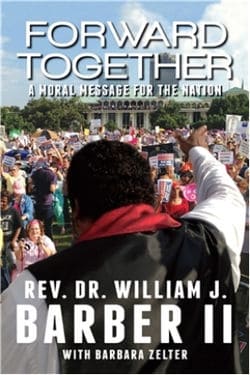
Rev. William Barber’s New Book Reminds Us Why We Must Vote


441_Forward_TogetherBy Terrance Heath

Progressive America Rising via Ourfuture.org

Oct 22, 2014 - With Election Day just two weeks away, the words of Paul Wellstone Citizen Leadership Award  recipient and Moral Mondays movement leader Rev. William Barber remind us, “If we ever needed to vote, we sure do need to vote now!” His new book reminds us of the moral power of progressive values when we march “forward together.”

Rev. Barber’s words come from his 2012 address to the NAACP, but as timely as ever with so much at stake in this election, as Denise Oliver Velez writes:

Election Day 2014 is on Tuesday, November 4, a little over two weeks away. This election will make a profound difference in the lives of many of our citizens. For some, it is a matter of life and death—given the refusal of some states to accept Medicaid expansion. We are all too aware of right-wing extremist efforts in many of those same states to suppress the vote, and to construct obstacles to voting.

One of the most powerful voices in the nation, fighting to mobilize a broad-based coalition of social activists to fight voter suppression, is that of the Rev. Dr. William Barber II. What is disconcerting is that with only a few exceptions, the major traditional media have managed to ignore his voice and the Moral Mondays movement he is leading—from his home base of North Carolina, to as far north as Wisconsin.

How did much of the press manage to ignore 80,000 people who marched in Raleigh, North Carolina, back in February?

While the traditional media is willing to pay homage to Martin Luther King Jr. and Rosa Parks in memorials and tributes, journalists are far too willing to pretend that the civil rights movement was buried with Dr. King. Contrary to those who speak as if the movement ended in 1968, it is alive and growing. Blacks, whites, Latinos, Asians, Native Americans, women and men—straight and LGBT, religious and non-religious, young and old—have come together in a breathtaking and extraordinary fusion movement, Moral Mondays, spearheaded by the Rev. William Barber, head of the North Carolina NAACP. His book about that movement, Forward Together: A Moral Message for the Nation, is being released by Chalice Press November 1.

Just in time for the election, Rev. Barber’s new book from Chalice Press, Forward Together: A Moral Message for the Nation, recalls the beginnings of the historic Moral Mondays movement, puts progressive values in a moral context we can take with us into the voting booth.

Last summer, after seven years of grassroots organizing, “Moral Mondays” grabbed the nation’s attention as thousands protested North Carolina’s General Assembly in Raleigh in support of the poor, voting rights, health care, immigrant rights, and other issues. Over 13 consecutive weeks, the protests against legislative extremism resulted in the arrests of nearly 1,000 people, making it one of the largest acts of civil disobedience in U.S. history. As thousands more gathered in support each Monday, Barber, president of the North Carolina chapter of the NAACP, became widely recognized as the leader of a new civil rights movement in the South. More than 100 “Moral Monday” connected events have since taken place, and the spirit of the movement has spread to Georgia, South Carolina, Virginia, Alabama, Arkansas, Missouri, Wisconsin, and New York. This reflection on the movement’s beginnings introduces Barber, the sources of his courage from both a biblical imagination for justice and a deep connection to “fusion” civil rights history, and the inspiring story of the Southern freedom movement’s revival.

Barber invites readers into a big-tent, faith-based movement for justice that has room for black, white, and brown, gay and straight, rich and poor, old and young, Republicans and Democrats, people from all walks of life. Offering his unique analysis of what he has called the “Third Reconstruction,” Barber locates North Carolina’s struggle in the spiritual and political landscape of 21st-century America. With civil rights and social justice battles with a deep moral narrative, particularly in southern statehouses that then move to federal courts on appeal, what happens in North Carolina can shift the center of gravity in political discourse, debate, and decision—and thereby change the nation.

“Messages of moral dissent are designed not to just be spoken and heard but to shape the prophetic consciousness of a movement and of society,” says Barber. “The prophetic voice rises when government systems and sometimes even religious systems have abdicated their responsibility to the least of these. When the forces of extremism have become so overwhelming and have depressed the hope of the people, the prophetic voice and mission is to connect words and actions in ways that build restorative hope so that there can be a movement for restorative justice. So this book is an attempt to capture the practice of ‘preaching’ in the public square, which is where prophetic inquiry and critique must function.”

Check out Rev. Barber’s book when it drops on November 1st and take his message into the voting booth on November 4th!

Read More...

Sunday, February 23, 2014

Good Turnout Needs a Left Turn, Not a Few Bones

Obama focuses on rallying Democratic base

By Karen Tumulty

[Progressive America Rising via The Washington Post

Feb 22, 2014 - WASHINGTON -- President Barack Obama is stepping up his efforts to coalesce and energize the Democratic base for the 2014 elections, backing off on issues where his positions might alienate the left and more aggressively singling out Republicans as being responsible for the country's problems.

Voter turnout in midterm elections tends to be much lighter than it is in years when the country is picking a president, which means that it is crucial to maximize the enthusiasm of the party stalwarts who are most likely to show up at the polls.

That helps explain why, in several sensitive policy areas, Mr. Obama recently has moved to defuse tensions with his fellow Democrats.

Liberals are celebrating the president's decision not to include a proposal to trim Social Security benefits in his 2015 budget, abandoning his previous stance in favor of making that part of a larger "grand bargain" to bring down the national debt.

And while the White House insists that it will continue to press Congress for more authority to negotiate trade deals -- something that puts the administration at odds with the Democratic base, and with its own party's congressional leaders -- Vice President Joe Biden this month signaled to House Democrats that it has no expectation that will actually happen.

Nor is the administration showing much appetite for bringing about a resolution to the question of allowing construction of the Keystone XL pipeline, an issue that pits environmentalists against unions, both of which the Democrats will be counting on in November. A Nebraska judge's decision on Wednesday rejecting the pipeline route in that state has raised the possibility that a decision may be delayed until after the election.

There remain some areas where Mr. Obama is at odds with key Democratic constituencies. For instance, he has resisted calls to reconsider policies that have resulted in a record number of deportations of illegal immigrants. Administration officials argue that easing up could undermine the president's larger goal of overhauling immigration laws.

White House officials insist that their efforts to please the Democratic base do not conflict with appealing to independent and swing voters.

Obama adviser Dan Pfeiffer noted that on many economic issues -- raising the minimum wage, ensuring pay equity for women, spending more on infrastructure and clean energy -- polls show most Americans share the Democrats' views.

"The position that is popular with the progressive base is the mainstream position," Mr. Pfeiffer said.

As he seeks to rally the Democratic base, Mr. Obama -- who will never again have to face voters himself -- is striking a more combative and partisan tone.

Read More...

Wednesday, August 28, 2013

Movement Envy: Chicago Looks at North Carolina

Protesters rally during "Moral Monday" demonstrations at Halifax Mall near the General Assembly in Raleigh, N.C., in July. More than 1,000 people have been arrested while protesting against policies being enacted by the North Carolina General Assembly. (AP Photo/Gerry Broome)

By Susan Klonsky

I admit it. We have a great movement here in Chicago, but still, I'm jealous of Mondays in North Carolina.

Reviving the spirit and moral compass of the Civil Rights Movement of the ‘60s, protest has become the Monday Lifestyle in NC.  People  put their Monday evening rallies on the calendar. “Mon. 5:30 pm:  Sit in, get arrested @ State Capitol.” It’s becoming sort of normal.

For the past 4 months in Raleigh, every Monday  is Moral Monday. Late in the day, as people get off work, they surround the Statehouse with rings of protesters. Mass arrests are scheduled, followed on Thursdays by well-organized press conferences by those arrested.  Every Monday the protests get larger—now exceeding 15,000 in Raleigh, with big rallies throughout the state. The movement is multiracial and has spread well beyond North Carolina’s capital out to the mountainous west of the state, to small towns and tiny hamlets.

Reverend Dr. William Barber

The leader of this movement is a Disciples of Christ minister, the Reverend Dr. William Barber III.  I had the pleasure of meeting Rev. Barber earlier this week. He is the latest in a bloodline of activist pastors who have fought racial segregation and its ugly siblings, poverty and violence, for generations. Rev. Barber, a giant of an orator, is the state chairman of the North Carolina NAACP. With the NAACP as its nucleus,  the Moral Monday Movement is an expansive coalition embracing an impressive number of organizations in all fields, labor unions, religious congregations, professional societies, and even fraternities and sororities. And they are on a roll.

“We’ve got a strategy. We never expected this thing to take off as it has. But we had to sit down and say, ‘where are we going with this?’” Barber explains. “We started off with one rally, and now we’re at the point of having 13 mass rallies in all 13 Congressional districts across the state. We’ve even had one of the county Republican party chairs renounce his own party,” as the result of the backward legislation the GOP has rammed through the North Carolina Legislature.

The Moral Monday folks have put their heads together and done the math. They’ve cooked up a plan for retaking the Democratic majority in the North Carolina Legislature and the state’s Congressional delegation. To accomplish these objectives will require a massive voter registration effort designed to boost the percentages of African American registered voters as well as a one-percent shift of white voters away from Republican candidates.

More than 1,000 arrests for civil disobedience.

The plan involves mass participation in voter education and mobilization. Unions and professional societies will play a big part, by having their members trained to register voters (and to deal with the new and exceptionally stringent, obstructive regulations about voter identification). “If each of us does 50 registrations, we can make our goal of 45,000 new voters,” Barber explains. “That’s why we must start now. It’s totally attainable.”

I asked Rev. Barber if he feels they can keep these Monday events going indefinitely. He explained that they are building for a few major events this winter. In particular, in December when the remaining major cutbacks to Medicaid in the state kick in, and again in January, he expects an uptick in mass protest against the attacks upon public education, social and health services, including reproductive rights, and state aid to the poor and unemployed.

Last month, Barber told us, the movement spread to some of the whitest, most heavily Republican parts of the state, where the Tea Party had until recently held sway. Now that people are beginning to experience the impact of budget slashing including removal of protections for teachers and other public employees, the picture is changing. “We were invited to speak up in rural Mitchell County, way up in the mountains,” Barber said, “and we found ourselves at a church way up there, in the evening, with at least a thousand people—an all white crowd—waiting for us.”

It used to be  Klu Klux country up there, and Reverend Barber admits he was somewhat apprehensive about what kind of reception he might receive.  He was greeted by the assembled joining together to sing Blessed be the tie that binds/Our hearts in Christian love.  “They were  fired up for Moral Monday.”

What brought them out, at least in part, Barber observed, was the attacks upon teachers. “They have 17 or 18 percent unemployment up there. And the schools are some of the biggest employers in these counties, and now they are having to lay off school personnel because of the state budget cuts to education. Plus, there is no more tenure or job security at all for them. A man got up at that meeting and declared, ‘When they hurt education, they really hurt us mountain people.’”

Moral Monday has lots of religious participants. But it is not a religious movement. “For me, this is a fight to uphold our deepest Constitutional, Biblical and faith values,” says Barber. It is many things to many people. At public meetings throughout the state, people testify to their worries, anger and intention to be part of the fight in North Carolina.

The issues draw them together:

Voting rights, health care, education, jobs and poverty. The movement stands in defense of  LGBT rights including marriage equality. How does Moral Monday deal with religion and religious differences? “We are tired of the Christian Right which is so wrong trying to dominate the moral high ground,” Barber explains. “We challenge them:  Are you really ready for a moral debate? Are you ready to defend what you have done?  Of course they don’t want to debate. It most certainly is a moral issue. Cutting people off from health care, from their jobs, taking food off their tables. They have no integrity and they hide from debate.”

The budget slashing and violations of basic civil rights are shaped by the ALEC agenda--the same ALEC which we protested less than 2 weeks ago in Chicago. The same ALEC which designed Florida’s murderous “Stand Your Ground” law.  These people are extremists, Barber emphasizes. Their policies are dangerous. And people are beginning to see them for what they are.

At the core of the Moral Mondays movement is a strong principle of anti-racism. It is impressive to witness this principle beginning to penetrate a broad swath of the population, as people come together to win back the rights that have been violated and denied.

Yes, we have a great movement here in Chicago, but I’m still a little jealous.

Read More...

Thursday, October 11, 2012

Can We Defeat the Racist Southern Strategy in 2012?

By Bob Wing*

Progressive America Rising

*Bob Wing has been an organizer since 1968 and was the founding editor of ColorLines magazine and War Times/Tiempo de Guerras newspaper. He lives in Durham, N.C. and can be contacted on Facebook. Thanks to Max Elbaum for his always insightful suggestions. This article was posted on Oct. 11, 2012.

The 2012 election is a pitched battle with race at the center.

It may not be “polite” to say this, but far from an era of “post racialism”, the United States is in a period of aggravated racial conflict. Though often denied and certainly more complex than the frontal racial confrontations of the past, race is the pivot of the tit-for-tat political struggle that has gripped the country for the past twelve years and, indeed, for decades prior.

The modern era of this conflict jumped off with the white conservative backlash against the Voting Rights Act of 1965 and has been deepened by their decades-long fearful reaction to the dramatic change in the color of the U.S. that resulted from the civil rights-motivated immigration reform act of 1965.

The conflict heated to a boil when white conservatives flatly rejected the legitimacy of the “premature” victory of our first Black president in 2008. Nearly 40 percent of Republicans are so enraged they cannot even admit that Obama is a U.S. citizen. Isn’t this really another way of saying they refuse to recognize a Black man as the president? Or perhaps it is the white conservatives’ modern day Dred Scott decision declaring Obama a Black man that has no rights that they are bound to respect?

The bottom line is that we have now come to a point where voters of color are so numerous and so united behind Obama that, to be victorious, Mitt Romney must carry a higher percentage of the white vote than any modern Republican candidate has ever won. If recent trends among voters of color hold, he must carry about 63 percent of white voters. Not even Reagan won more than 61 percent.

Read More...

Friday, September 28, 2012

Can Black Youth Repeat Their Strong Voter Turnout From 2008?

Obama supporters gather in Grant Park during an election night gathering on November 4, 2008 in Chicago, Illinois. (Photo by Eric Thayer/Getty Images)

By Heather McGhee
TheGrio.com

As the chart above shows, a remarkable and hopeful trend within the youth vote is the rise of the black youth vote. In 2008, a greater share (63.9 percent) of black citizens under 30 overcame the unnecessary hurdles of registration than any other youth demographic, and a record 58 percent voted – the highest youth turnout rate in history. Even in the low-turnout midterm elections of 2010, African American youth led their white, Asian and Latino peers to the polls.

This tale of progress is not irreversible, however. Imposing strict photo identification requirements could, according to a new report from the Black Youth Project, lead to the demobilization of anywhere from 9 to 25 percent of young voters of color in this election. That distortion of our democracy is a high price to pay to prevent the lightning strike that is in-person voter fraud. At best, it’s a cynical move by elected politicians to keep citizens from voting them out. At worst, it’s a desperate reaction to the demographic evolution that threatens to make a party without multiracial appeal into an historical artifact.

The good news is that we can fix this. Passing laws that expand the freedom to vote truly do work: states with same-day registration, a central Demos policy proposal, had young adult turnout in 2008 a full nine percentage points higher than states without the reform. As my colleagues have catalogued this week, nationwide same-day registration could diminish the need for a National Voter Registration Day weeks before the campaign.

For now, however, coordinated action that invites young people to register themselves and their friends is essential. Many youth groups were official partners of National Voter Registration Day this week, including one, the Andrew Goodman Foundation, with a special history.

During the Freedom Summer of 1964, three activists in their early 20s – two Jewish, one black – traveled through Mississippi to register black Americans to vote. The three, Michael Schwerner, James Chaney and Andrew Goodman, were murdered on a country road by a Ku Klux Klan mob. They gave their lives for the freedom to vote – and for the American dream of political equality and inclusion that this freedom helps keeps alive.

Heather McGhee is vice president of policy and outreach at Demos, a New York-based policy think tank.This piece first appeared on Demos’ blog Policy Shop.

Read More...

Wednesday, September 5, 2012

Saving Obama, Saving Ourselves


By Tom Hayden

Progressive America Rising

The threat of a Romney-Ryan regime should be enough to convince a narrow American majority to vote for Barack Obama, including the disappointed rank-and-file of social movements.

A widening of economic and racial inequality. Cuts in Medicare and Medical. More global heating. Strangling of reproductive rights. Unaffordable tuition. The Neo-cons back in the saddle. Two or three more right-wing Supreme Court appointments to come. Romney as Trojan horse for Ryan the stalking horse and future presidential candidate.

The consolidation of right-wing power would put progressives on the defensive, shrinking any organizing space for pressuring for greater innovations in an Obama second term.

Where, for example, would progressives be without the Voting Rights Act programs such as Planned Parenthood, or officials like Labor Secretary Hilda Solis or EPA administrator Lisa Jackson?

But the positive case for More Obama and Better Obama should be made as well. History will show that the first term was better than most progressives now think. A second-term voter mandate against wasteful wars, Wall Street extravagance, and austerity for the many, led by elected officials including Elizabeth Warren, Bernie Sanders, Barbara Lee, Raul Grijalva, Jim McGovern and Keith Ellison, would be a target-rich field of opportunities as they say in the Pentagon.

Why Obama's achievements are dismissed or denied by many on the white liberal-left is a question worth serious consideration. It may only be a matter of legitimate disappointment after the utopian expectations of 2008. It could be pure antipathy to electoral politics, or a superficial assessment of how near-impossible it is to change intransigent institutions. It could be a vested organizational interest in asserting there is no difference between the two major parties, a view wildly at odds with the intense partisan conflicts on exhibit every day. Or it could even be a white blindness in perceptions of reality on the left. When African American voters favor Obama 94-0 [that's right] and the attacks are coming from the white liberal-left, something needs repair in the foundations of American radicalism.

I intend to explore these questions further during the election season. The point here is that they cumulatively contribute to the common liberal-left perception that Obama is only a man of the compromised center, a president who has delivered nothing worse celebrating. The anger with Obama on the left, combined with broad liberal disappointment with the last three years, results in a dampened enthusiasm at the margins which could cost him the election.

Read More...

Monday, September 29, 2008

Youth Vote: Critical Battleground Everywhere


[Note: A second article appended stresses the financial crisis on youth and students]


26,000 Young Voters
in Virginia brave
rain for Obama rally


By Rachael Dickson
Youth Vote 2008 Correspondent

Fredericksburg, VA, Sept. 28, 2008 - Thousands of Sen. Barack Obama's supporters cheered him Saturday night as he spoke through the pouring rain at University of Mary Washington.

According to UMW student Peter Ceo, a College Democrats member, people started arriving at the event at 10 a.m., nine hours before the Democratic presidential nominee and his vice presidential running mate, Sen. Joseph Biden, arrived.

"The line was well over half a mile long this morning," Ceo said.

Virginia is a key state in this year's election as the landscape is changing from a historically conservative state to more liberal in recent years.


According to The Washington Post, Jay Snipes, chief of the University of Mary Washington police force, estimated that 12,000 people were at the rally and another 14,000 were unable to get in after the United States Secret Service stopped allowing people in around 5 p.m.

The large, diverse and fiercely loyal crowd withstood the afternoon's high heat and humidity, which left many dehydrated. Though event volunteers passed out water bottles to the densely packed crowd, at least two attendees were observed taken away by emergency medical staff.

Later, when the sky opened up and it began to pour, the audience shielded itself with trash bags, jackets, Obama/Biden signs, blankets and whatever came to hand. Much of the press members took shelter, wrapping expensive cameras in ponchos as they retreated to a tent reserved for the traveling press or ducked under the risers.

Obama's supporters took the opportunity to dance and sing in the rain to the music pumping out over the loud speakers- a mix of classics such as Marvin Gaye and Tammi Terrell's "Ain't No Mountain High Enough" and newer songs such as "Move Along" by the All-American Rejects.

The sun came out and dried the crowd in time for a few preliminary speakers to give abbreviated speeches before Biden and Obama arrived. Fredericksburg's state Sen. Edward Houck jazzed up the audience by leading cheers commenting on last night's first presidential debate.

"Who won the debate last night?" Houck said, smiling at the crowd's roaring answer of "Obama." "The difference between Obama and McCain could not have been more obvious."
He also commented on the importance of registering to vote, saying, "All across America we have the opportunity to reach out and touch the future."

Raucous cheers greeted Biden and Obama as they walked out on the stage. Biden began the program to cheers of "Joe! Joe!" by talking about the differences between Obama and McCain at the debate.

"Last night McCain's silence was definite," Biden said. "You did not hear him say the words middle-class or working class once."

Biden also criticized McCain's foreign policy positions in Afghanistan and Iraq.

"We need more than a brave soldier," Biden said. "We need a wise leader. And that's Barack Obama."

Obama cracked a joke to begin his speech.

"I know some of you got a little damp, and I'm deeply sorry," he said. "Those of you wearing that special outfit, I would like to cover everyone's dry cleaning bills tonight, but I can't cause I got to use it on the campaign. So consider it one more modest effort to help the campaign."

Later on in his speech, as another deluge of rain began, Obama took off his jacket after joking about his own dry-cleaning bills and then proceeded to continue speaking to the crowd for another ten minutes, without cover.

Obama also spoke on the debate, calling McCain "out-of-touch" and saying ""On issue after issue, you heard John McCain make the case for more of the same."

He also joked about McCain's use of "change" in recent political advertising by saying
"Change is more than a slogan."

Obama referred to McCain's lack of mention of the words "middle-class" or "working-class" by saying "In 90 minutes, John McCain had a lot to say about me- but he had nothing to say to you...We need a president who will change the economy so it finally works for your family."
Obama spoke of the American dream to succeed as well, saying, "In America, our destiny
isn't written for us, it's written by us."

After talking for almost half an hour, Obama said good night to the crowd, leaving the stage with Biden. The crowd dispersed quickly, eager to get to their dry cars and dry-cleaning bills.

[Rachael Dickson is a junior at George Mason University and an award-winning journalist who works as a freelance contributor for WashingtonPost.com's LoudounExtra.com.]

----------------

September 26, 2008

Failing Economy Has
Young Voters Worried


For young Americans, it’s the economy too, stupid.

A new Rock the Vote poll of voters ages 18-29 has found that 41 percent said the next president’s first concern should be the economy, compared with just 17 percent who listed it as their chief concern in February. Eleven percent said gas prices were most important, while the war in Iraq and the cost of higher education garnered 10 percent each.

Although young voters have changed their focus to the economy, their presidential choice remains steady: The poll found that Barack Obama leads John McCain, 56 percent to 29 percent, among young voters. Those voters also appeared likely to defy the idea that they won’t turn out at the polls: 87 percent said they planned to vote, compared with 82 percent in February.

“Democrats are winning big this year among young voters, and young voters’ high level of engagement has the potential to turn into record turnout at the polls,” said Celinda Lake, president of Lake Research Partners, which helped conduct the poll. “Senator Obama nearly doubles Senator McCain’s vote share, Congressional Democrats lead by more than 20 points, and young people want change. Every Democratic campaign should pay close attention to the growing youth movement.”

Though just 2 percent of those polled said they considered climate change as their top concern, an advocacy group is hoping a wind farm will change that. Starting with tonight’s presidential debate at the University of Mississippi, Power Vote will be installing 30 nine-foot-tall windmills at each of the debate sites, as well as various other college campuses, to encourage the use of clean energy.


Read More...

Saturday, September 27, 2008

'Watching Party,' Beaver County Style


Photo: Obama rally in Beaver County

The Debate Highlights
A Hard Battle Here,
But Tough Fighters, Too


By Carl Davidson

Progressives for Obama

An Obama-McCain 'Debate Watching' party in Beaver County last night, Sept. 26, 2008, promised to be a fun evening, but it also offered as good an occasion as any to measure the progress, tasks, and difficulties of the Obama campaign here in Western Pennsylvania.

The polls here are currently giving Obama a slight edge, but there are too many wild cards to put anyone at ease.

I got my invitation to one of these events about two hours before the party began, and changed plans quickly to attend. It was pulled together by the young volunteers of the county's Obama campaign in partnership with Local 712 of the IBEW, SEIU activists, and some organizers with the 4th CD Progressive Democrats of America.


The union hall is on Sassafras Lane near a strip of small businesses and nonprofit agencies in Vanport, PA a working class suburb next to Beaver, the county seat. Beaver is relatively stable with government offices and a large medical center, but just a few miles in any direction are the distressed mill towns of Midland, Beaver Falls, Monaca, New Brighton, Rochester, Baden, Aliquippa, and Ambridge. The old village of Shippingport, is home to a big energy complex and the country's first nuke plant.

All the industry here in the post-WW2 years meant plenty of work then for the IBEW and many other workers. But everyone feels the tough conditions of globalized de-industrialization now, and it was a natural to see stacks of 'Workers for Obama-Biden' posters at the door.

'Is this where we watch the fights tonight?', I asked a bunch of young apprentices gathered for a smoke outside the door. They laughed and said I was at the right place, followed with some friendly sports banter about whether McCain was 'the Great White Hope' or the 'Great White Dope.''

Inside a young Obama worker, Chris, is hooking up a laptop and projector to stream the video of the debate onto a giant screen. Together, we figure out how to get the blue tones right. Three young African American women, Obama volunteers from New Brighton, just across the river, are discussing how some people they've canvassed haven't a clue about the difficulties bringing up kids compared with what Sarah Palin's daughter faces. An older white union worker starts talking with them about attending a dinner and rally to bring more manufacturing back to the Ohio River Valley.

But a quick look at the room shows this place is used by people who take elections seriously, warts and all. The walls are hung with county maps of the 4th CD, with critical townships highlighted. On a long row of tables are neatly stacked piles of folders, labeled by township and precincts, with lists of registered union voters inside, each one tagged with the number of workers needed on the canvass team. This is where the Saturday morning 'Labors Walks' of doorknockers are pulled together, and it's clear that a quality of the working class, as well as the Obama volunteers, is knowing more than a little about organization. The walks will take place every weekend up to the big mobilization on Election Day.

More people arrive and start filling the room, laying out a spread of snacks next to the coffee pot, beer, and wine. There are 30 or so altogether. About half are older white electrical workers, letter carriers, and younger service employees, with a few PDA people; the other half is a rainbow of young Obama volunteers.

An Obama staffer, Kyra Ricci, comes up to greet me, thanking me for helping them earlier with some media work. Like all of them, she's wired and tired, working 16 hour days every day. 'But it's less than 40 days to go, we'll make it', she says. Both she and Chris query me about other campaigns were like in Chicago, going back to Obama's first run. I explain that I started before that, with Jesse Jackson's runs, and Harold Washington's victories. I give them my five-minute short course on running independent campaigns against tough old machines.

I ask about the canvassing. 'We're getting down to the wire,' one union guy tells me. 'Some people tell me they're still making up their minds. I tell them, look, if you want me to stop bugging you, just declare one way or the other, if you really know but aren't saying. That way we won't waste each other's time, we can argue later, and I can get to more people in the next 39 days.'

A cheer goes up when the debate finally starts and the room darkens. People listen intently and excitedly to Obama, but started groaning at McCain. The first 'boos' start when he's defending taxes cuts for the rich: 'Why? So they'll invest it in cheap labor abroad?,' yells one older worker. Of course this room is self-selected and pro-Obama-there's no unbiased cross-section of voters here. But the response is interesting nonetheless.

The older workers shout out challenges to McCain on every economic point, especially health care. I'm sitting next to Randy Shannon of PDA and Charlie Hamilton of the postal workers, and they're comparing notes about the banking system's undue influences throughout. Charlie tells me he's retired. 'I am too,' I reply, 'but I've never been busier!' He laughs out loud. 'That's right, me too, and you know what? If you don't stay busy, you die early!'

The entire room, however, cheers Obama when he nails McCain on the war's being a fundamental mistake in the first place, that should never have been fought. The older workers laugh when McCain comes back that Obama doesn't understand 'strategy and tactics.' 'We'll teach him a thing or two about strategy and tactics,' say one worker.

I was a little surprised at the enthusiasm of some for Obama’s war talk on Afghanistan, where I think he needs a different and wiser approach. I bring it up my critical point on the matter later talking to two union officials and a few other workers.

But the most interesting reaction was at the very end, when McCain pulled out his POW experience. The older workers groan, 'Here we go again, you were a prisoner, give it a rest!' Now this is from a group that has considerable respect for this part of McCain's story--but 'that was then and this is now' is clearly the mood. They wanted more serious answers to serious current questions, and McCain had none, as least for them.

Everyone cheers when it's over. But Kyra, always on the ball, takes the center of the room before anyone can leave, and lays out the work plan: 'Don't forget, we can still register new voters right up to Oct. 6. We're driving them nuts down at the courthouse, bringing in batches of hundreds. But they thank us, sort of, for the overtime!"

Charlie tells me getting them registered is only the first step; getting them to the polls is even more important. 'Too many of these youngsters register, then forget to vote,' he says. 'We'll get them, we've got the lists, we'll knock on their doors, give them a ride,' Kyra answers. 'No slackers allowed,' I laugh, and then tell a funny story about a ward election in Chicago, where the machine was trying to beat us. I knocked on a door of some 'plus' voters, only to discover them in a little dalliance on the couch. 'Get dressed and get your butts to the polls, we need you,' I said. Sure enough, two minutes before we closed, the young couple came running in, breathless. It made my day, since my candidate won by only 150 votes.

Up front, Kyra continues getting everyone committed, but there's one important point that needs to be made here. This was a good gathering of union workers, housewives, young students, African Americans, PDA activists, and Obama workers. The AFL-CIO is campaigning for the Democratic ticket from top to bottom. Alongside the 'Workers for Obama-Biden' poster are a half-dozen stacks of posters and yard-signs for other local Democratic candidates. But none of them or their reps are here tonight.

It's called the 'Top of the Ticket' problem. When our Congressman Jason Altmire is out campaigning, he doesn't urge folks to vote for Obama. He will only say he expects Obama to win. This problem exists in many places where local Democratic incumbents or the old party machine never supported Obama or are now dragging their feet. There is fear that coming out solidly for Obama will cost them the votes of Democrats who are leaning towards McCain. They work their own campaigns, leaving 'the top of the ticket' to the Obama youth working their hearts out. The situation demands leadership from them, turning Hillary voters into Obama voters. Part of the problem is that racism infects the old boy network and it takes courage to buck it. Some are subtle, or try to be, but it's noticeable enough to spotlight it for progressive activists on the local level everywhere.

Bob Schmetzer, an official with the IBEW, is standing near the door chatting with some folks preparing to leave. Bob tells us he's investigated where McCain stands on veterans issues: 'I was surprised; his stands really suck.' He's making up a special flyer comparing Obama and McCain on the issue, with Obama coming out on top, to have his members take around to the many veterans organizations in Beaver County. 'Maybe it will open some eyes,' he says.

Finally, as I head toward the door, a white-haired woman, a union veteran, brings me to a dead stop, and looks me straight in the eye. 'We're going to win this,' she says. I hope so, I say, it's very tight, and everything counts. 'No,' she says with a steely look in her eyes and a resolute tone in her voice, 'We're going to win this. We have no choice.' Women like her are Obama's ace-in-the-hole, so let's do all we can to bring out and engage a million of them by Election Day.

[Carl Davidson is webmaster for 'Progressives for Obama' ( http://progressivesforobama.blogspot.com) and a field organizer for the US Solidarity Economy Network (http://ussen.org ). Together with Jerry Harris, he is the author of CyberRadicalism: A New Left for a Global Age. Along with Jenna Allard a Julie Matthaei, he also edited the newly published 'Solidarity Economy: Building alternatives for People and Planet.' Both are available at lulu.com/stores/changemaker. He was founder and director of Peace and Justice Voters 2004 in Chicago, a past member of the steering committee of United for Peace and Justice, and a member of the Committees of Correspondence for Democracy and Socialism ( http://cc-ds.org ). See http://carldavidson.blogspot.com for more information.]

Read More...

Wednesday, September 17, 2008

Depressing the Vote the 'Modern' Racist Way


Barack Obama:
The Price of
Being Black


By Andrew Hacker
New York Review of Books September 25, 2008 Issue


--Restoring the Right to Vote, by Erika Wood, Brennan Center for Justice, 34 pp., available at www.brennancenter.org

--Crawford v. Marion County [Indiana] Election Board, US Supreme Court, April 28, 2008

--Florida State Conference of the NAACP v. Browning, US Court of Appeals, 11th Circuit, April 3, 2008

In May, Hillary Clinton described many of her core supporters as "hard-working Americans, white Americans." Primary voting in Pennsylvania, Ohio, and West Virginia confirmed her surmise. Her remark seemed, without saying so, to claim an advantage over Obama that was due to his race.

But there's more we need to know. We can see how being a farmer or a bond trader or a gun collector might influence your vote. And we understand why black Americans would want a person of their race in the Oval Office. But just what is there about being white that might incline someone toward one candidate instead of another?


Senator Clinton implied that this identity was salient for some voters and that she could appeal to it. Polls showed that some 15 to 20 percent of white voters in those three states said that "race" was a factor in their vote, and we are left to wonder just how much of a factor and how many more would have said the same if they had been frank with the interviewer. People are uneasy talking about the subject of race, but the feeling persists that Obama's half-ancestry could tip the scales on November 4.

1.

Barack Obama can only become president by mustering a turnout that will surpass the votes he is not going to get. This may well mean that more black Americans than ever will have to go to the polls, if only because the electorate is predominantly white, and it isn't clear how their votes will go. Obstacles to getting blacks to vote have always been formidable, but this year there will be barriers-some new, some long-standing-that previous campaigns have not had to face.

For many years, the momentum was toward making the franchise universal. Property qualifications were ended; the poll tax was nullified; the voting age was lowered to eighteen. But now strong forces are at work to downsize the electorate, ostensibly to combat fraud and strip the rolls of voters who are ineligible for one reason or another.

But the real effect is to make it harder for many black Americans to vote, largely because they are more vulnerable to challenges than other parts of the population. Licensed to Vote In a 6-3 decision in April written by John Paul Stevens, Crawford v. Marion County Election Board , the Supreme Court upheld a 2005 Indiana law requiring voters in that state to produce a government document with a photograph at the polls.

In practical terms, this meant a passport or a driver's license. Since less than a third of adults have a passport, the Indiana case focused largely on how many adults lack a license to drive. During oral arguments, several justices pressed the plaintiff's lawyer for an answer. For reasons I cannot fathom, he kept using the number 43,000, for a state whose voting-age population is 4.6 million. In fact, the Federal Highway Administration, in an easily obtained report, says that 673,926 adult residents of Indiana have no license, which works out to a not trivial 14.7 percent of the state's potential electorate. Had that percentage been stressed, we can conjecture that Justices Stevens and Anthony Kennedy might have shifted their position. Requiring a driver's license to vote has a disparate racial impact, a finding that once commanded judicial notice. To apply for the state ID card that Indiana offers as an alternative, moreover, nondrivers must travel to a motor vehicles office, which for many would be a lengthy trip.

While licenses do not record race, Justice David Souter cited relevant studies of the race of license-holders in his dissent, which was joined by Justices Stephen Breyer and Ruth Bader Ginsburg. In one survey, made by the Department of Justice in 1994, black residents of Louisiana were found to be four to five times more likely not to have the official photograph needed for an identifying document. (Not to mention access to a car; recall how many couldn't leave as Katrina approached.) A Wisconsin survey published in 2005 was more precise. No fewer than 53 percent of black adults in Milwaukee County were not licensed to drive, compared with 15 percent of white adults in the remainder of the state. According to its author, similar disparities will be found across the nation. [1] The Indiana decision will not only make it harder to add new people to the rolls; many who had previously voted without photo identification are now required to produce an official photograph. If Marion County (Indianapolis) has the same proportion of unlicensed voters as Milwaukee County, I count it as having more than 44,000 black residents who will be needing transport to motor bureaus to ensure that each item in their nondriver ID application has been properly filled in. Extended nationwide, this means that a lot of on-the-ground assistance is going to be needed.

Purging the Rolls In 2002, Congress passed the amiably titled Help America Vote Act, presumably to thwart the recurrence of butterfly ballots and dimpled chads. To ensure that voters won't face problems at their polling place, each state is required to maintain an electronic "statewide voter registration list," to be linked to every precinct. States were also mandated to keep their lists current, eliminating the people who die or move away. One method is to mail letters to everyone on the rolls and expunge the names on those letters returned because the addressee could not be found.

But black families tend to move more, especially in cities, and few think to notify election officials. When Ohio purged 35,427 returned names in 2004, a review found that the addresses were in "mostly urban and minority areas." [2] Here too, getting back on the rolls can be like mending a mistaken credit rating. Florida doesn't depend on mailings. Rather, it uses computers to match registrants' names against their Social Security numbers, which are then sent to Washington (actually Baltimore) to see if they match. Whoever devised this syst em should have known that the Social Security Administration is unable to match submitted names with numbers in 28 percent of the cases sent to it: for example, because they are maiden names of women who married or changed them back after a divorce. [3] Not to mention keyboard operators getting a single digit wrong.

Florida also uses the help-the-voter act to check felony records, since convicted criminals there can't vote. Oddly, it only requires that 80 percent of the letters in your name match with the name of someone with such a record. So if there's a murderous John Peterson, the software disenfranchises everyone named John Peters. In view of the racial rates for incarceration, black voters are more apt to have names closely resembling those with felony histories. Florida's system for purging the voting lists was approved by a 2-1 ruling in federal circuit court this spring, Flor-id a State Conference of the NAACP v. Browning . The dissenting judge, Rosemary Barkett, a Clinton appointee, was the only one to spell out the disparate racial impact. She noted that while black voters made up 13 percent of the scanned pool, they comprised 26 percent of those who were purged; while whites were 66 percent of the pool, they were only 17 percent of the rejected group. Again, if you have plenty of time, you can claim that the computer was mistaken and try to find documents that show you exist and were never a felon.

Voteless for Life

Proportional to the population, the United States leads the world in putting people behind bars, and currently has 2.3 million in its jails and prisons. Among inmates, black men and women outnumber Hispanics by more than two to one and whites by nearly six to one. This is another reason why a much higher ratio of black citizens will be unable to vote this year, because they are among either the 882,300 who are currently incarcerated or the two million who have served sentences but continue to be disenfranchised.

According to Restoring the Right to Vote , a report by the Brennan Center for Justice at New York University Law School, 13 percent of black men cannot cast votes; in three states 20 percent cannot because they are locked up or formerly were. Some states specify felonies that condemn the citizen to disenfranchisement for life. Alabama includes soliciting a child by computer, possession of obscene matter, and treason. Yes, some crim es are heinous; but completing a sentence is supposed to signify that a debt has been paid. Indeed, a desire to vote can be seen as showing a willingness to accept a citizen's obligations.

Virginia takes an especially harsh view of drug offenses, which is mainly why so many black Americans are imprisoned there, not least because it's so easy to make such arrests. Released offenders must wait seven years before they can file a petition for their vote, which must be accompanied by seven documents and several supporting letters, plus another to the governor detailing "how your life has changed" and specifying "why you feel your rights should be restored." Mississippi has a similar regimen: with 155,127 men and women released between 1992 and 2004, only 107 petitions to have the right to vote restored were approved. The disenfranchisement of former felons in Kentucky has reduced its potential black electorate by 24 percent. [4]

According to the Brennan Center report, only Maine and Vermont allow inmates to vote (as they can in Israel and Canada). Thirteen states, including Pennsylvania and Michigan, allow former convicts to vote upon their release from prison, while twenty-five bar voting until such ex-prisoners have completed their probation or parole. The other ten, like Alabama and Virginia, make the process of reattaining the right to vote so arduous that most people don't try. Nor does there seem to be much sentiment in those states for removing the bans or lowering the barriers. So allowing one-time inmates to become full citizens will be a long-term campaign; it will not likely have much effect on the next few elections.

2.

While a high black turnout will obviously help Obama, whether he becomes president will hinge on the decisions of white voters. (Most Hispanic-Americans list themselves as white or don't designate a race.) In all, 94.2 million white Americans took part in the 2004 presidential election, as compared to only 13.5 million blacks; and 58 percent of whites supported George W. Bush against just 41 percent for John Kerry. So the Obama campaign, even if helped by external events, will have to change a lot of white minds.

There are already danger signs. In three states, race will in effect be on the ballot. Colorado and Nebraska are giving their residents a chance to ban affirmative action. The measures in both states carry the title "civil rights initiative," at the urging of the Black political activist Ward Connerly, who succeeded in outlawing affirmative action in California and has inspired similar campaigns in other states. The signs are that both measures will pass with votes to spare. This is what happened in California (1996), Washington (1998), and Michigan (2006), which tend to be liberal states. The reason isn't hard to find.

Putting affirmative action on a ballot encourages white majorities to identify themselves by their race. It's their rights they are voting to restore. What is seldom openly said is that a lot of white Americans feel racially aggrieved. They were represented by Barbara Grutter and Jennifer Gratz, whose petitions to end affirmative action reached the Supreme Court in 2003. [5] Their claims were that places which would otherwise have been theirs at the University of Michigan were given to less qualified black applicants. Thus, they argued, they were rejected because they were white, and there was an official preference for other races. In separate decisions, the Court narrowly upheld the law school's affirmative action method, while striking down the undergraduate admissions procedure.

What is rarely mentioned is that neither Grutter nor Gratz were outstanding candidates. To put it crudely, they weren't high on the "white list." And a lot of whites see themselves in the same situation. They are the ones who don't get admission or promotions, and thus feel they bear the brunt of affirmative action. Nor are they wrong about this, as Obama observed in his Philadelphia speech. Moreover, such feelings about affirmative action appear to be nationwide, even in states where it hasn't been on the ballot.

Obama's word "bitter" may describe a good many blue-collar and middle-income families whose children have been rejected by their state's university. This explains why close to 65 percent of white voters in California, Washington, and Michigan supported the bans, and why similar proportions are expected to in Colorado and Nebraska this November. So a task of Obama's campaign is to ensure that this white cause--which is what it is--does not carry over to the presidential contest. While only fourteen electoral votes are at stake, they could make a difference.

Two Democratic senators, Patty Murray of Washington and Debbie Stabenow of Michigan, may have some useful advice. In 1998 and 2006, it was clear that many voters whose support they needed would also be supporting repeal of affirmative action. Yet Murray managed to win with 58 percent of the total, while Stabenow's margin was 56 percent. How they managed to keep separate their own election and the vote on affirmative action, for example, by emphasizing economic issues, could be instructive.

As I write, several polls give Obama about 47 percent and McCain about 45 percent, a decline of several points for Obama from the polls of May and July. The rest of the respondents say they are undecided. At the same time the state-by-state estimates by pollster.com show Obama leading in electoral votes, with 102 such votes a "toss-up." The numbers will probably have changed by the time you read this. Yet now and later, there's a chance that the real percentages will be the reverse of those I've cited. Some people who are telling pollsters they're for Obama could actually be lying.

Such behavior has been called the "Bradley Effect ," after Tom Bradley, a black mayor of Los Angeles who lost his bid to be California's governor back in 1982. While every poll showed him leading his white opponent, that isn't how the final tally turned out. Things haven't been far different in some other elections involving black candidates. In 1989, David Dinkins was eighteen points ahead in the polls for New York's mayoral election, but ended up winning by only a two-point edge. The same year, Douglas Wilder was projected to win Virginia's governorship by nine points, but squeaked in with one half of one percent of the popular vote. Nor are examples only from the past. In Michigan in 2006, the final polls forecast that the proposal to ban affirmative action would narrowly prevail by 51 percent. In fact, it handily passed with 58 percent.

That's a Bradley gap of seven points, which isn't trivial. Pollsters contend that respondents often change their minds at the la st minute, or that conservatives are less willing to cooperate with surveys. Another twist is that more voters are mailing in absentee ballots, and it's not clear how those early decisions are reflected in the polls. Yet the Bradley gap persists after voters have actually cast their ballots. Just out of the booth, we hear them telling white exit pollers that they supported the black candidate, whereas returns from these precincts show far fewer such votes. Thus they lie to interviewers they don't know and will never see again.

Barack Obama wants to think "white guilt [over treatment of blacks] has largely exhausted itself in America." [6] I'm less sure. Almost all people who reject black candidates say they have nonracial reasons for doing so. And many undoubtedly believe what they're saying. So I'm not persuaded that the Bradley gap won't emerge this year. The Obama campaign would do well to print signs to post prominently in all its offices: ALWAYS SUBTRACT SEVEN PERCENT! Since 1968, the Democratic Party has not been able to muster a majority of white Americans. Al Gore fell twelve percentage points behind among white voters in 2000, and John Kerry had a seventeen-point gap four years later.

It all started with Richard Nixon's strategy, which was initially aimed at the South. With the opening of electoral rolls to blacks, the then-dominant Democrats were becoming a biracial party, which disconcerted many whites. So Nixon invited them to join the Republicans, assuring them that they would not press to integrate their party. The formula continued to work when it moved north with the emergence of Reagan Democrats. By the 2000 GOP convention, there were only eighty-five black faces among the 2,022 Republican delegates. Some unknown proportion of white voters doesn't want to support a party to which black Americans are drawn-"any more," as Darryl Pinckney has noted, "than they would go on living on a street that got too integrated." [7]

I've been careful so far not to use the word "racism." The term itself has become an obstacle to understanding. Once white people hear it, they tend to freeze, and start listing reasons why it doesn't apply to them. After all, most Americans admire Oprah Winfrey, like Tiger Woods, and respect Colin Powell. Yet racism persists, albeit not publicly voiced, especially in the belief that one's own is a superior strain. Here, however, not many whites regard Barack Obama as their inferior; effete or arrogant perhaps, but they don't fault him on intellect. To some, indeed, he may seem too much the intellectual. Resentment of perceived black privilege is also involved, as we have seen with respect to affirmative action, and even fear of some kind of racial payback. Over half of a largely white sample told a Rasmussen poll that they feel Obama continues to share at least some of Reverend Jeremiah Wright's positions on America.

On underlying sentiments, surveys aren't much help. For example, in an ABC News-Washington Post poll in June, 20 percent of the whites who responded said a candidate's race would factor heavily in their vote, while 30 percent admitted to feelings of racial prejudice. If the Bradley Effect was at work, as many as one third of the voters may count race as important. (We know of whites who are for Obama because they'd like to have a black president, which is also a racial reason.) In July, 70 percent of whites told a New York Times/ CBS News poll that they felt the country "is ready to elect a black president." Of course; that's what people feel obliged to say today. Yet some might have followed it up with "but not Barack Obama." The surveys can't measure white apprehensions over having a black man at the head of their government. Michael Tomasky has said that to win, Barack Obama "will need to build multiracial coalitions." [8]

What seems more needed, in my view, are two parallel campaigns: a quiet one to assure a maximum black turnout, and a more public one to make the most of the white backing the Obama-Biden ticket already has. His rallies, appearances, and advertisements would benefit from featuring white faces, and they should be accompanied by endorsements from white military veterans, union leaders, police chiefs, and firemen. His black supporters will know what is going on, and not take this as a rebuff. -August 28, 2008

NYRB, Volume 55, Number 14 · September 25, 2008


Read More...

Thursday, August 14, 2008

Critical Task: Register New Young Voters

Photo: A rainbow of new young voters

New Ohio Law
Makes Voter
Registration Easier


By Philip Elliott
Associated Press Writer

Aug 13, 2008 - Never mind the last days of the presidential campaign. The busiest days for Barack Obama's campaign in this perennial swing state are likely to be a month before Election Day.

Ohio has created a window in the election calendar that would allow residents instant gratification — register one minute, vote the next. It's also given the campaigns of Democrat Barack Obama and Republican John McCain a chance to bank thousands of first-time voters during that Sept. 30 to Oct. 6 window.

The move will benefit Obama, who enjoys a 2-to-1 lead over McCain among 18- to 34-year-olds, according to a Washington Post-ABC News poll released last month. If Obama's campaign were able to tap into college campuses with one-stop voting, it would add thousands of votes to his tally in a state where, in 2004, John Kerry lost to President Bush by only about 118,000 votes, putting Bush over the top in the electoral count.


Of the more than 470,000 students enrolled in Ohio's public colleges and universities in 2006, the most recent figures available, nine out of 10 were Ohio residents, the state Board of Regents said. To register to vote in Ohio, a person must be a resident of the state for at least 30 days immediately before an election.

Ohio elections officials say they are working out potential kinks, such as questions about whether a vote counts when it is cast or when it's counted. They also are trying to address potential fears of massive voting fraud, and what effect this influx is going to mean on vote security.

Democratic Secretary of State Jennifer Brunner on Wednesday issued a directive advising county elections boards that they must have procedures in place to allow voters who register to be immediately issued an absentee ballot. She said boards can delay voting if they have concerns over the validity of a registration.

Brunner said absentee ballots are verified once they are cast and counted after polls close Election Day.

Allowing voters to cast their ballots weeks before Election Day is a growing trend. More than a dozen states permit early voting, and more than two dozen provide an absentee ballot to any registered voter for any reason. The battleground states of Colorado, Florida, Nevada and New Mexico allow voters both options.

In Ohio, Republicans are clearly not pleased with same-day registration and voting and have not ruled out a lawsuit against Brunner's office.

"You have to wonder, when they look at what they consider a loophole with such excitement," said Jason Mauk, the Ohio Republican Party's executive director. "That would suggest manipulating the process, and I think opens the door to suspicion."

The voting window, so far, is only being implemented in some counties — typically, urban areas or those with college campuses — leading Republicans to cry foul.

"The prospect of someone coming in with no ID and registering and voting is contrary to every sort of protection that legislators and lawmakers have built into this system for decades," said Kevin DeWine, a Republican lawmaker who is poised to take over the state party after the election. "The processes and the law and the systems in our 88 counties are not equipped to handle same-day registration."

People in Ohio can register without identification, but they have to show some sort of ID to vote.

State lawmakers accidentally made the window before the 2006 elections. Obama's campaign is eager to take advantage of it this year.

"This is one of many ways we'll be encouraging our supporters to skip the lines on Election Day and make sure their vote is cast early," said Isaac Baker, an Obama spokesman.

The move is likely to bring Obama to Ohio for nonstop campaigning that week. Also, television ads are expected to be in heavy play as both campaigns try to take advantage of the electoral oddity. And the early push could help neutralize any last-minute attacks by one campaign on the other.

Outside, independent groups also are looking at spending a lot of time on campuses that week. Organized labor and liberal activist groups see a chance to build their numbers.

Obama, 47, has been attracting a strong following on campuses, something his campaign has aggressively targeted. McCain, 71, has made attempts but has struggled.

Ohio has been a must-win state for presidential candidates during past cycles, but Obama advisers had been weighing a move to skip it. He lost 83 of 88 counties during his fierce primary campaign against Sen. Hillary Rodham Clinton. Some Democrats privately fear the map in the general election against McCain will look very similar.

Obama has trailed in support from rural voters and white, working-class voters. He hasn't campaigned in rural areas, despite advice from Democratic Gov. Ted Strickland, whose aggressive rural strategy helped him win his job in 2006 and was repeated for Clinton during March's primary.

But Obama advisers now look at Ohio's campuses as a possible way to offset the losses.

It has Ohio Republicans frustrated. Traditionally, young people make a lot of noise about elections and then stay home. If they don't actually have to turn up at the polls on Election Day, then they might take a greater interest.

Mauk said if Brunner doesn't apply the "loophole" in all counties, lawsuits are an option Republicans have to consider.

The secretary of state's spokesman acknowledged the window exists.

"Instructions are being developed and being sent to boards of election across the state to make sure voting is consistent," said Jeff Ortega, Brunner's spokesman.

Its impact is going to be felt in non-presidential races as well. For instance, Ohio State University is the largest college in the country, with more than 52,000 students enrolled on its main campus in Columbus. Democrats are eyeing it as key to helping Mary Jo Kilroy win her House seat to replace Republican Deborah Pryce, who is not seeking re-election.

"There is no question that the huge effort to register and turn out voters at Ohio State University is going to have a positive impact on our race," said Brad Bauman, a spokesman for Kilroy.

Ohio election law for the first time will allow voters to cast a presidential ballot by mail for any reason. In the past, there were specific provisions by which voters could cast a ballot early. But the law was changed; this is the first national general election in which it will be in play.

In 2004, more young people cast ballots than any other time since 18- to 20-year-olds earned the right to vote in 1972. Turnout in 2004 was up 11 percentage points over 2000.

Even so, 47 percent of eligible 18- to 24-year-old voters didn't cast a ballot that year. During 2002's midterm elections, 82 percent of that group said they did not vote.


Read More...

Monday, August 4, 2008

Post-Denver: Altering the Political Landscape

Photo: Registering New Voters

Millions of
New Voters
Are the Goal


By Steven Rosenfeld
AlterNet

August 4, 2008 - Barack Obama's presidential campaign is seeking to register "millions" of new voters immediately after the Democratic Convention, according to top campaign officials who say the effort is one facet of a "capacity-building" effort this summer that includes extensively training thousands of campaign workers as community organizers.

The voter registration effort is part of a broader strategy to not just elect Obama, but also to alter the political landscape by shifting power from Washington to the grassroots, the officials say, to cultivate a base for significant political reforms. The campaign sees its training and voter registration efforts as the cornerstone of building a new progressive movement like the rise of conservatism during Ronald Reagan's presidency.


"We need everybody in this party to get behind this effort to turn out thousands and thousands of volunteers in every single state in the country, to hit the streets and go register millions of new people that weekend alone," said Steve Hildebrand, Obama's deputy campaign manager, speaking at the recent Netroots Nation conference. "It's not about whether or not we will get Barack Obama elected. It is about whether or not we will have a progressive majority in this country for decades to come."

Last week, the campaign and the Democratic National Committee announced it would commit $20 million to "engaging and mobilizing" Hispanic voters in an effort that will include "voter mobilization, voter registration, online organizing, community outreach and paid advertising" and "also include Camp Obama trainings around the country."

"We expect our demographic to turn out at 80 percent," said Jason Green, the campaign's national voter registration director. "We are all about cultivating leadership."

The plan to train thousands of new community organizers and register millions of new voters is not business as usual for Democratic presidential campaigns, which for years have been run as top-down operations with little input from the grassroots. Instead, the campaign is seeking to blend the best aspects of community organizing, which stresses relationship building, with established, nuts-and-bolts voter outreach tactics to win.

A handful of experts who have worked in these dimensions of campaigns said the Obama plan realized a longtime hope of community groups to have a real role in presidential campaigns. However, those same people -- who did not want to be named -- questioned whether the Obama campaign had "the experience to do it right." Some state Democratic Party officials agreed. As one voter outreach expert put it, before listing many things that his group took years to master, "I want to believe."

Neither Hildebrand nor the other campaign officials who divulged their grassroots strategy at the Netroots conference replied to requests for follow-up interviews. However, as the deputy campaign manager concluded his talk, he said there were very good reasons why the campaign's strategy could work in 2008: the public wants real change; its candidate is charismatic; the campaign has the money -- and the volunteers -- to make it work.

"If we don't use this opportunity, if we don't do this right, shame on us," Hildebrand said, "because we will never have it as good as we have it right now."

The Obama campaign also has a track record of winning in 2008's primaries using this same strategy, which it is now institutionalizing for November's election.

Exhibit A: South Carolina

"They said the way you used to win down here is you pay off the ministers, you pay off the state senators and the state reps, and you have some chicken dinners," said Jeremy Bird, the campaign's South Carolina field director during the primary, recounting the thinking he found among local Democrats when setting up shop in March 2007. "That didn't jibe with our candidate's message, or his bio, or anything that he said since he started to run for president or started running for the state senate."

Bird, who joined Hildebrand and others at the forum for bloggers and independent media, exemplified the Obama campaign's new ethos.

Bird began by telling his story -- which echoed the campaign's narrative. He grew up in Missouri in a fundamentalist Southern Baptist family and got involved in community organizing after graduate school in Boston. In 2004, he worked for Howard Dean's presidential campaign, and then for the Democratic National Committee, and after the election for organized labor. After reading one of Obama's books and relating to his work as a voting rights activist after law school, Bird joined the campaign. He arrived in South Carolina in March 2007 with little more than some videos and his acumen as a community organizer.

Instead of courting the local political establishment, Bird said he sought out community leaders and held "thousands of one-on-one meetings," where he would show a video and then listen to their concerns. The meetings typically lasted 45 minutes or more -- a long time for a top staffer of a national political campaign to spend with anyone. The most responsive leaders were then asked to host local gatherings, Bird said, where they introduced the candidate and campaign to their community.

"We asked them to support us and bring their social networks and hold house meetings," he said. "In those meetings, we were testing our first contact's leadership, and then we asked people to be team leaders."

Bird said he divided the state into neighborhoods and created teams for every five to 10 precincts. He said he rejected "the old precinct captain model" in which one person would be in charge of a candidate's operation, because Obama did not have enough supporters in every precinct. Bird then asked the teams how they could be helped by the statewide campaign. By the 2008 state primary day, Bird said Obama had 283 neighborhood teams and more than 10,000 volunteers working across South Carolina.

Obama won South Carolina's January Democratic primary with 55 percent of the vote -- a stunning margin. Hillary Clinton had 27 percent, and John Edwards had 18 percent.

"I was a skeptic of Jeremy and his crew in South Carolina, and whether he could build enough capacity to get us across the finish line," Hildebrand said, explaining that he has worked on campaigns for 22 years but never put as much trust and responsibility in the hands of local organizers. "I quickly lost that skepticism, and I saw the numbers that they were creating."

"It wasn't about identifying voters," Hildebrand said. "It was about building capacity to have the resources to do our persuasion and to turn out the vote. I give Jeremy and his team a tremendous amount of credit for building this field model and implementing this in a way that a state like South Carolina has never seen before. ... Every state is a field state if you know how to organize the field."

After the primaries, Bird said the national campaign interviewed 200 field organizers from all the states to assess and fortify the process for the rest of the campaign.

"The top lesson was, training and empowering people made the biggest difference," he said. "This wasn't just making phone calls and (telling volunteers that) you are going to make a lot of them. It's 'We are going to train you in a quality way from the second you come into our office ... in how to become a real leader.'"

The Training

Green, a recent Yale Law School graduate -- whose father was a minister "who preached a message of change" -- is now Obama's national voter registration director. He worked in Nevada during the primary and caucus season. Green said the campaign knew it would not succeed unless it cultivated real ties with supporters.

"If our organizers who are paid in our states made phone calls all day, we would not get it done," he said, explaining why the campaign turned to tactics used by local organizers. "We do it by building relationships. We rely on telling people's stories to create more connections. We listen more than we talk. In organizing, it is important to take the time to hear what people have to say, about the campaign, about politics generally."

The campaign says it does not ignore the nuts-and-bolt tactics of any contest -- voter contact, recruiting volunteers, boosting visibility, expanding the electorate -- and benchmarks to reach those goals. But what it also does -- and this has been noticed with some degree of bewilderment by the national press and more experienced Democratic Party workers -- is put an extraordinary emphasis on training its staff to tell their own stories, and to listen to others, especially the very people they are seeking to reach.

Numerous press accounts describe Obama training sessions where volunteers tell their personal stories, as if it were a political Alcoholics Anonymous meeting. Experienced party activists who have attended these sessions have complained they were frustrated that the campaign did not give them more tools to be effective. But top Obama staffers like Hildebrand said empowering people at the grassroots level has created a more committed campaign, with tangible results in the primary states.

"They believe this is real. They don't believe it is a game. They believe they can get it done," he said. "This was a welcomed opportunity for so many of us to get involved in -- when you have a candidate that really believed in building this from the ground up."

Bird said the primary season had several important lessons. Foremost was the value of training. That was followed by "working close to the ground," or opening many local campaign offices, he said. Next was focusing on volunteer leadership and developing teams "because when you have people who are out there in teams, you see they come together in a way that precinct captains, on his or her own, aren't able to do."

"The fourth thing was to integrate the technology to support this," he said. "The fact that when you sign up on our e-mail list, you are automatically on our voter file, and we can follow up with you and know when you signed up and what you are interested in. ... On Election Day in South Carolina, we had an unprecedented number of cell phone numbers, people that had opted in, that we were able to text and remind people to vote. And they were able to text back in (when they voted)."

Bird said the campaign rejected a long-standing political campaign assumption that saw meeting strict goals and developing grassroots relationships as opposing values, because the community-building component was ephemeral while the benchmarks like meeting voter registration targets were concrete. Both of these approaches were needed, he said, so volunteers would take ownership over meeting the campaign's goals.

What is clear is that Obama's approach has attracted some very committed workers.

"I was looking for a place where there was an effort to get change from the top down and the bottom up at the same time," said Joy Cushman, who volunteered in South Carolina, where she went to house parties, held one-to-one meetings with local leaders, and met Bird. She, too, was on the Netroots Nation panel.

At first glance, Cushman is an unlikely an Obama supporter. She grew up in rural Maine and became involved in politics through her church, where she advocated for conservative issues such as school prayer. She then went on to work on affordable housing and other issues affecting low-income communities in Massachusetts. That brought her to the Obama campaign -- after she realized that grassroots power and new political leadership were both necessary to change the status quo.

"I saw that Jeremy recognized, and the organizers recognized, that the awakening it takes for people to take on the responsibility for really being citizens is not something that happens at a mass level," she said. "It is something that happens one living room at a time, one kitchen table at a time, and this campaign was investing in that effort."

Obama's Organizing School

It was striking to see Cushman and Bird -- who grew up in socially conservative homes -- as examples of the campaign's best and brightest organizers. Indeed, many of the campaign's local organizing tactics have long been used by the religious right.

"I am a child of the conservative movement," Cushman said. "The brilliance of the church was we were organizing on abortion and prayer in schools, and it wasn't just focused on Washington, it was focused on our local community. They realized for everyday people to be involved, the issues need to connect with our values, and we need to have a very local way, and a meaningful way, to get involved at the local level that isn't just forwarding e-mails to our Congress people in Washington."

Obama's deputy campaign manager agreed. "Why does Barack Obama at times admire Ronald Reagan?" Hildebrand asked. "Because he built a movement -- not because of his policies. Don't ever criticize him for that. It is because Ronald Reagan built a movement. That's what we will do. That's what we are doing."

In April, Caroline Kennedy e-mailed Obama supporters, saying the campaign would train a new generation of grassroots leaders this summer. A "fellows" program would take 30 hours a week for six weeks. Thirty-six hundred applicants were accepted, said Cushman, who was asked to help develop the program. The training started in June.

"Over three days in early June, we trained them how to be authentic leaders themselves and share their story," Cushman said. "We train them how to build relationships, how to do one-on-one conversations with people, how to lead house meetings, how to do voter registration, because we have a 50-state voter registration project."

First, the fellows were given voter registration goals, Cushman said. Her team in Georgia -- where she was assigned -- registered 1,200 new voters. The next goal was holding house meetings. Two weeks later, on June 28, the campaign held more than 4,000 such sessions across the country, she said, to "do what used to be truly American, which is sit and talk about what do we want for ourselves, our country, and what is our responsibility."

"The fellows aren't just college students looking for something to do over the summer," Cushman said. "They are teachers and airline pilots and firefighters and people who have decided that they are willing to take the risk and make sacrifices to change the country."

Cushman said people she meets often say the last time Democrats saw anything like the campaign's grassroots effort was during the civil rights movement a half-century ago. And it is a page from that very era -- an unprecedented national voter registration drive immediately following the Democratic Convention -- that the campaign hopes will be the key to victory in November and an ensuing groundswell for political reform.

Millions of New Voters

Green, the campaign's national voter registration director, said the campaign knows an estimated 60 million Americans are eligible to vote but are not registered. States such as Nevada, where George W. Bush beat John Kerry by 21,500 votes in 2004, has 390,000 eligible but unregistered voters. The task, Green said, is to reach out to potential voters in conventional and unconventional ways. That means finding them anywhere in their communities, such as at bus stops, shopping centers, social service organizations, senior centers, naturalization ceremonies, campuses and concerts, as well as house parties.

"We know that our targeted group is very transient," he said, referring to the fact that lower-income people, students and young people move often, which complicates the voter registration process in states that require specific forms of documentation to register.

"The night Barack accepts the nomination, we will have house parties," Green said. "We will ask those people to register voters on the next few days."

"We saw through the 2008 primaries that we had voter registration opportunities that never existed to us in this party," Hildebrand said. "We learned through experience ... that our efforts on the ground to register voters was really, really important."

Those listening to the Obama campaign officials speak at Netroots Nation included state Democratic Party officials and others who work in voter registration organizations. One high-ranking state party official was more than skeptical that the campaign would be able to find millions of new voters on Labor Day Weekend, which follows the Democratic Convention, and subsequently turn out these new voters come Election Day. Another party official from the same large state feared that the Obama campaign, despite its talk about the importance of grassroots, would siphon volunteers who were badly needed for down-ballot state legislature and municipal races. Those officials said early reviews of Obama's training and outreach efforts were frustrating, with predictable errors on voter registration forms and a reluctance to ask more seasoned campaigners for advice -- despite all the talk of listening to local leaders.

Another voter registration expert predicted that mistakes on the voter registration forms -- an inevitable part of any voter drive -- would be used by the Republican Party to accuse the Obama campaign of voter registration fraud, just as the GOP has repeatedly attacked voter registration efforts by groups like ACORN (Association of Community Organizations for Reform Now) in recent years. It was one thing for a nonprofit group to make these kinds of mistakes, the expert said, but more politically volatile when a presidential campaign errs.

"They have the infrastructure to reach a million voters," said a voter registration researcher. "But do they have the infrastructure to reach a million disenfranchised voters who would not register otherwise?"

Efforts to contact these Obama campaign officials after the Netroots Nation conference to discuss these points were unsuccessful. The campaign aides at the conference did not discuss "quality control" issues, which established voter registration groups say are critical.

But Hildebrand said the planned voter registration drive was intended not just to benefit the Obama campaign, but to help elect Democrats at every level, especially in state legislatures where the majority would redraw congressional district boundaries in 2009. And since Obama became the presumptive Democratic nominee, his campaign and the national party's operations have been merging, as evidenced by the DNC's announcement last week that it would spend $20 million to engage Hispanic voters.

Hildebrand said the training of community organizers and the voter registration effort was necessary not just to elect Obama, but to deliver on an agenda of political change.

"We can't be so single-minded that this is about Barack Obama, because it is not," he said. "It is about the American people and the principles that are important to us. Whether or not we will get health care passed; whether or not we will stop the war in Iraq; whether or not we are going to build an education system that we can be more proud of. There are a lot of things that we as progressives hold fundamentally dear, and if this is about a game, we are not being all that successful -- and neither is our opposition. But if it is about a movement that can fundamentally change the way we do business in this country at every single level, then we will be successful."

Steven Rosenfeld is a senior fellow at Alternet.org and co-author of "What Happened in Ohio: A Documentary Record of Theft and Fraud in the 2004 Election," with Bob Fitrakis and Harvey Wasserman (The New Press, 2006).

© 2008 Independent Media Institute. All rights reserved. View this story online at: http://www.alternet.org/story/93718/

Read More...

My Zimbio Add to Technorati Favorites Locations of visitors to this page EatonWeb Blog Directory