Showing posts with label 2014 Election. Show all posts

Saturday, November 15, 2014

Elizabeth Warren: It’s Time to Work on America’s Agenda


(J. David Ake/AP)

By Elizabeth Warren

Op-Ed, Washington Post

Elizabeth Warren, a Democrat, represents Massachusetts in the Senate.

Nov 7, 2014 - There have been terrible, horrible, no good, very bad Election Days for Democrats before — and Republicans have had a few of those, too. Such days are always followed by plenty of pronouncements about what just changed and what’s going to be different going forward.

But for all the talk of change in Washington and in states where one party is taking over from another, one thing has not changed: The stock market and gross domestic product keep going up, while families are getting squeezed hard by an economy that isn’t working for them.

The solution to this isn’t a basket of quickly passed laws designed to prove Congress can do something — anything. The solution isn’t for the president to cut deals — any deals — just to show he can do business. The solution requires an honest recognition of the kind of changes needed if families are going to get a shot at building a secure future.

It’s not about big government or small government. It’s not the size of government that worries people; rather it’s deep-down concern over who government works for. People are ready to work, ready to do their part, ready to fight for their futures and their kids’ futures, but they see a government that bows and scrapes for big corporations, big banks, big oil companies and big political donors — and they know this government does not work for them.

The American people want a fighting chance to build better lives for their families. They want a government that will stand up to the big banks when they break the law. A government that helps out students who are getting crushed by debt. A government that will protect and expand Social Security for our seniors and raise the minimum wage.

Americans understand that building a prosperous future isn’t free. They want us to invest carefully and prudently, sharply aware that Congress spends the people’s money. They want us to make investments that will pay off in their lives, investments in the roads and power grids that make it easier for businesses to create good jobs here in America, investments in medical and scientific research that spur new discoveries and economic growth, and investments in educating our children so they can build a future for themselves and their children.

Before leaders in Congress and the president get caught up in proving they can pass some new laws, everyone should take a skeptical look at whom those new laws will serve. At this very minute, lobbyists and lawyers are lining up by the thousands to push for new laws — laws that will help their rich and powerful clients get richer and more powerful. Hoping to catch a wave of dealmaking, these lobbyists and lawyers — and their well-heeled clients — are looking for the chance to rig the game just a little more.

But the lobbyists’ agenda is not America’s agenda. Americans are deeply suspicious of trade deals negotiated in secret, with chief executives invited into the room while the workers whose jobs are on the line are locked outside. They have been burned enough times on tax deals that carefully protect the tender fannies of billionaires and big oil and other big political donors, while working families just get hammered. They are appalled by Wall Street banks that got taxpayer bailouts and now whine that the laws are too tough, even as they rake in billions in profits. If cutting deals means helping big corporations, Wall Street banks and the already-powerful, that isn’t a victory for the American people — it’s just another round of the same old rigged game.

Yes, we need action. But action must be focused in the right place: on ending tax laws riddled with loopholes that favor giant corporations, on breaking up the financial institutions that continue to threaten our economy, and on giving people struggling with high-interest student loans the same chance to refinance their debt that every Wall Street corporation enjoys. There’s no shortage of work that Congress can do, but the agenda shouldn’t be drawn up by a bunch of corporate lobbyists and lawyers.

Change is hard, especially when the playing field is already tilted so far in favor of those with money and influence. But this government belongs to the American people, and it’s time to work on America’s agenda. America is ready — and Congress should be ready, too.

Read More...

Saturday, November 8, 2014

Why the Democrats Lost

Progressive policies had success –?? too bad the party didn't run on them

By Bhaskar Sunkara
Progressive America Rising via al-Jazeera

Nov. 4, 2014 - From the outside, it looks as though American voters are more confused than ever.

On election day, they showed their concern about growing economic inequity by voting for ballot measures that increased the minimum wage. They proved their progressive values by supporting marijuana legalization, gun control and reproductive rights. In the same go, they elected Republicans in Senate and House of Representatives races, guaranteeing a GOP majority in Congress for years to come.

The disconnect seems difficult to grasp, though much of it can be attributed to low turnout and the fragmented nature of American politics, where national topics are often of little importance in local races.

District gerrymandering also played a role; the Democrats had more votes than their total number of seats would indicate. Republicans directly instigated the redrawing of congressional lines in many states over the past few years. As journalist Lee Fang notes, Democratic candidates in Pennsylvania won 44 percent of the vote, but secured only 27 percent of the state’s congressional seats.

Even so, a substantial level of Republican support is undeniable. Barack Obama has presided over an economic recovery that exceeds that of most European countries, but that still feels sluggish to most Americans, whose real wages and living standards have been stagnant or in decline for a generation.

Change isn’t on the way either: The president has been unable to follow through on the policy priorities he does have, even when he had a more favorable Congress early in his administration. And Obama’s chief legislative victory — health care reform — is inadequate and built around concessions to the private health insurance industry.

Obama, of course, does face a determined and organized right-wing opposition. The Tea Party may no longer be capturing headlines, but the organization and zeal they’ve injected into the Republican Party is undeniable. Their base is a tradition one for the American Right: middle-class and wealthy white men. As a whole, 64 percent of white males voted for Republicans, the largest margins in years. And this time around they were also joined by more women. Democrats still won more votes from women, but it was just by a margin of 5 percent, down from 11 percent in 2012.
There are huge swathes of the country with broadly social-democratic politics who are effectively to the left of most mainstream Democrats and feel left out by the party’s outreach.

Demographic shifts are often touted as proof that the Democrats should be able to maintain control of the White House. It is true that Asians, Hispanics, and blacks voted in such astounding numbers for Obama that he was able to win comfortably with only 39 percent of the white vote. And with advantages among young people and continued inroads into the Sun Belt, trends still favor the Democrats. Republicans, on the other hand, have increasingly become a regional party wedded to the antiquated rhetoric of white identity politics.

But at the local level the Republican Party remains better able to mobilize and turn out its supporters in midterm elections. The formula could mean a rightward lurch at the national level, even if Hillary Clinton eases to victory in 2016.

The response of mainstream Democrats to the present situation essentially boils down to blaming young people and minority voters — who support them every four years in presidential elections but “don’t care enough” to show up in off years. They speak of a crisis of politics and voter apathy in sweeping terms, while barely mentioning their own shortcomings.

But there’s a good reason why people turn out and support measures such as minimum wage laws when they’re on the ballot: They’re not idiots. They understand the policies that will make their lives and the lives of other working people better and they know that it’s important to support them.

But Democrats didn’t offer enough such proposals. Instead, most Democrats were satisfied with reassuring voters that they weren’t Republicans. It’s hard to think of a candidate from the party who spoke broadly in moral and ethical terms, presented their vision of a good society and how we could reach it. This should come as no surprise; the Democrats are too tied to moneyed interests and too disconnected from labor and pressure from social movements to embrace progressive politics consistently or to be anything other than tepid centrists.

By contrast, the other side of the political spectrum, in the tea party-influenced Republican Party, shows the power of a consistent and ideological politics that motivates its base to get out and vote every November.

Don’t get me wrong: There isn’t a commanding progressive majority just waiting to see radical candidates on the ballot. But there are huge swathes of the country with broadly social-democratic politics who are effectively to the left of most mainstream Democrats and feel left out by the party’s outreach. Once organized and engaged, they can change American politics. But they’re going to need a more compelling reason than the tired biannual sell “Look at at us, we’re not Republicans.”

Bhaskar Sunkara is the founding editor of Jacobin.

The views expressed in this article are the author's own and do not necessarily reflect Al Jazeera America's editorial policy.

Read More...

Wednesday, November 5, 2014

A Few Quick Thoughts on the November 4Th Election

By Bill Fletcher, Jr

http://billfletcherjr.com

(1) There is almost always a low turnout during a midterm election and the party which controls the White House tends to lose.  This is definitely true but should not let us off the hook.

(2) The Democratic base largely stayed home except in certain important races, such as in North Carolina.  I think that we have to face the reality that the base that would be expected to vote Democratic was dis-spirited.  It is not just the ads that the Republicans ran.  The Obama administration has not led in a progressive direction.  There are certainly some major accomplishments, but there had been great expectations by many that after the 2012 election he would come out swinging.  I never had such expectations, but many people did.  Instead the administration continued to be stuck in various crises but also was not articulating a clear direction.  The Republicans were able to make Obama out to be the problem despite certain important facts, e.g., the economy has improved; troops had been pulled out of Iraq.

(3) Though the economy has improved, the condition for the average working person has not.  Yes, unemployment is down but we are still dealing with structural unemployment that is weighing on everyone.  The damage from the foreclosure crisis is far from over.  And the rich are the ones who are benefiting from the improved economy.   To turn any of this around masses of working people need to be organized to fight for a division of the wealth.  Yes, that means building and supporting labor unions.  But when the President does not make that a clarion call–except when speaking with union members–he has no answer to the public that is asking for their share.

(4) Race, as always, was a factor.  The Republicans had sufficient codes to make it clear that race was an issue in the election.  Discussions about Obama allegedly being prepared to open up the flood gates to immigrants is a case in point.  But there were many other messages.  Once again, the Republicans have positioned themselves as the “non-black party.”  Race arose in some additional and odd ways.  The Ebola crisis, for instance, was tinged with a racial cover.  The fear and panic associated with it and blaming it on Obama!

(5) This election was about money…but also not:  This was the most expensive midterm in history.  Yet it was not a guarantee that one would win if there was money on the table.  The Democrats, in various races, sunk in a great deal of money.  So, we cannot put it all on that.  Money, however, plus motivation can make one VERY bit difference.

(6) The Democrats keep falling back into running technocrats.  While this was certainly not the case in every election, it was striking that there is this default position of channeling Michael Dukakis ’88 and suggesting that one is a good candidate because one can run the trains on time.  Instead of positioning as an advocate for the people, and especially the people who are being squeezed, too many Democrats were running as technocrats and bi-partisan healers.  Yet this, in part, relates to money.  If you cannot run a campaign without goo-gobs of money, it is more difficult to run as a progressive populist.

(7) Progressives need to support and create organizations that are fighting for political power at the local and state level.  We need formations (which i have called “neo-Rainbow”) that can identify and train candidates; build bases; take on initiatives and referendums; and run our candidates either in Democratic primaries or as independents, depending on the tactical situation.    This brings with it a series of major challenges not the least being accumulating resources.    There is no easy answer to the resource question but one thing that is certain is that building the sorts of organizations i am referencing, e.g., Virginia New Majority, Florida New Majority, Progressive Democrats of America, will necessitate around the clock resource accumulation, including but not limited to fundraising.  We will NEVER have the funds of the Koch brothers so we need to get over that and think about the strategies, tactics and organizational forms necessary and appropriate to an asymmetric situation.

Read More...

Tuesday, November 4, 2014

Dollarocracy: Even the Establishment Is Worried

Election 2014: A new level of collaboration between candidates and big-money allies

Thirty-six Senate races, $3.6 billion in total costs and one election: Here's a look at 2014 midterm spending, by the numbers. (Julie Percha/The Washington Post)

By Matea Gold
Washingtom Post

Nov.3, 2014 - The 2014 midterm elections mark a new level of collaboration between candidates and independent groups, eroding the barrier that is supposed to separate those running for office from their big-money allies.

The vast sums of cash raised by independent groups have reordered the political landscape, compelling campaigns to find new ways to communicate their wants and needs without officially coordinating with outside players. Such direct coordination is prohibited under 40-year-old campaign finance rules.

This is not how the system used to work. Just a decade ago, candidates shied away from being too closely associated with “soft money,” for reasons of appearance and for fear of running afoul of election laws.

But the rapid spread of super PACs and politically active nonprofit groups that followed the Supreme Court’s Citizens United decision has dramatically altered the climate. Political operatives are also taking advantage of the hands-off approach of a divided Federal Election Commission, which has not reexamined coordination rules in the wake of the 2010 ruling.

“There is a lot of boldness,” said Larry Norton, a campaign finance lawyer at Venable who served for six years as the FEC’s general counsel. “It’s partly a function of very sketchy rules and regulations and little enforcement. People aren’t sure where the lines are.”


Read More...

Monday, October 27, 2014

Time to Narrow the Target: It’s Not ‘Washington,’ It’s Rightwing Republicans

Ideology and Investment

By Paul Krugman
New York Times Opinion

Oct 26, 2014 - America used to be a country that built for the future. Sometimes the government built directly: Public projects, from the Erie Canal to the Interstate Highway System, provided the backbone for economic growth. Sometimes it provided incentives to the private sector, like land grants to spur railroad construction. Either way, there was broad support for spending that would make us richer.

But nowadays we simply won’t invest, even when the need is obvious and the timing couldn’t be better. And don’t tell me that the problem is “political dysfunction” or some other weasel phrase that diffuses the blame. Our inability to invest doesn’t reflect something wrong with “Washington”; it reflects the destructive ideology that has taken over the Republican Party.
Some background: More than seven years have passed since the housing bubble burst, and ever since, America has been awash in savings — or more accurately, desired savings — with nowhere to go. Borrowing to buy homes has recovered a bit, but remains low. Corporations are earning huge profits, but are reluctant to invest in the face of weak consumer demand, so they’re accumulating cash or buying back their own stock. Banks are holding almost $2.7 trillion in excess reserves — funds they could lend out, but choose instead to leave idle.

And the mismatch between desired saving and the willingness to invest has kept the economy depressed. Remember, your spending is my income and my spending is your income, so if everyone tries to spend less at the same time, everyone’s income falls.

Read More...

Thursday, October 23, 2014

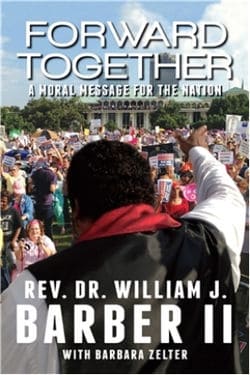
Rev. William Barber’s New Book Reminds Us Why We Must Vote


441_Forward_TogetherBy Terrance Heath

Progressive America Rising via Ourfuture.org

Oct 22, 2014 - With Election Day just two weeks away, the words of Paul Wellstone Citizen Leadership Award  recipient and Moral Mondays movement leader Rev. William Barber remind us, “If we ever needed to vote, we sure do need to vote now!” His new book reminds us of the moral power of progressive values when we march “forward together.”

Rev. Barber’s words come from his 2012 address to the NAACP, but as timely as ever with so much at stake in this election, as Denise Oliver Velez writes:

Election Day 2014 is on Tuesday, November 4, a little over two weeks away. This election will make a profound difference in the lives of many of our citizens. For some, it is a matter of life and death—given the refusal of some states to accept Medicaid expansion. We are all too aware of right-wing extremist efforts in many of those same states to suppress the vote, and to construct obstacles to voting.

One of the most powerful voices in the nation, fighting to mobilize a broad-based coalition of social activists to fight voter suppression, is that of the Rev. Dr. William Barber II. What is disconcerting is that with only a few exceptions, the major traditional media have managed to ignore his voice and the Moral Mondays movement he is leading—from his home base of North Carolina, to as far north as Wisconsin.

How did much of the press manage to ignore 80,000 people who marched in Raleigh, North Carolina, back in February?

While the traditional media is willing to pay homage to Martin Luther King Jr. and Rosa Parks in memorials and tributes, journalists are far too willing to pretend that the civil rights movement was buried with Dr. King. Contrary to those who speak as if the movement ended in 1968, it is alive and growing. Blacks, whites, Latinos, Asians, Native Americans, women and men—straight and LGBT, religious and non-religious, young and old—have come together in a breathtaking and extraordinary fusion movement, Moral Mondays, spearheaded by the Rev. William Barber, head of the North Carolina NAACP. His book about that movement, Forward Together: A Moral Message for the Nation, is being released by Chalice Press November 1.

Just in time for the election, Rev. Barber’s new book from Chalice Press, Forward Together: A Moral Message for the Nation, recalls the beginnings of the historic Moral Mondays movement, puts progressive values in a moral context we can take with us into the voting booth.

Last summer, after seven years of grassroots organizing, “Moral Mondays” grabbed the nation’s attention as thousands protested North Carolina’s General Assembly in Raleigh in support of the poor, voting rights, health care, immigrant rights, and other issues. Over 13 consecutive weeks, the protests against legislative extremism resulted in the arrests of nearly 1,000 people, making it one of the largest acts of civil disobedience in U.S. history. As thousands more gathered in support each Monday, Barber, president of the North Carolina chapter of the NAACP, became widely recognized as the leader of a new civil rights movement in the South. More than 100 “Moral Monday” connected events have since taken place, and the spirit of the movement has spread to Georgia, South Carolina, Virginia, Alabama, Arkansas, Missouri, Wisconsin, and New York. This reflection on the movement’s beginnings introduces Barber, the sources of his courage from both a biblical imagination for justice and a deep connection to “fusion” civil rights history, and the inspiring story of the Southern freedom movement’s revival.

Barber invites readers into a big-tent, faith-based movement for justice that has room for black, white, and brown, gay and straight, rich and poor, old and young, Republicans and Democrats, people from all walks of life. Offering his unique analysis of what he has called the “Third Reconstruction,” Barber locates North Carolina’s struggle in the spiritual and political landscape of 21st-century America. With civil rights and social justice battles with a deep moral narrative, particularly in southern statehouses that then move to federal courts on appeal, what happens in North Carolina can shift the center of gravity in political discourse, debate, and decision—and thereby change the nation.

“Messages of moral dissent are designed not to just be spoken and heard but to shape the prophetic consciousness of a movement and of society,” says Barber. “The prophetic voice rises when government systems and sometimes even religious systems have abdicated their responsibility to the least of these. When the forces of extremism have become so overwhelming and have depressed the hope of the people, the prophetic voice and mission is to connect words and actions in ways that build restorative hope so that there can be a movement for restorative justice. So this book is an attempt to capture the practice of ‘preaching’ in the public square, which is where prophetic inquiry and critique must function.”

Check out Rev. Barber’s book when it drops on November 1st and take his message into the voting booth on November 4th!

Read More...

Tuesday, October 14, 2014

The 2014 elections and the ‘Second Great Disenfranchisement’

By David Schultz

Progressive America Rising via Twin Cities Daily Planet

Oct. 12, 2014 - Elections are supposed to be the way people select their leaders. Increasingly that is no longer the case. The courts now occupy an enormous role in determining the outcome of elections–even before they start. That is clearly the case this year where too often the goal has become to rig elections by making it harder for some, especially people of color, the poor, and the young, to vote. This especially seems to be the strategy of Republicans who continue to push the Second Great Disenfranchisement in American history.

Consider what is happening across the country right now, with less than a month before the election and early voting already taking place in many states.

The U.S. Supreme Court upheld Ohio’s curtailment of early voting which was adopted by Republicans, after a federal district court and a court of appeals stayed the law. Republicans in Wisconsin pushed through a strict voter ID law and just in the last few days the Supreme Court has enjoined its enforcement for this election. Suits are challenging limits passed by Republicans in North Carolina limiting on same day voter registration and a ban on counting ballots from incorrect precincts. And in just the last few days a federal judge enjoined a voter ID law in Texas that would have disenfranchised over 600,000 voters, especially impacting African-Americans and Latinos. This law too was pushed by Republicans including the state’s governor Rick Perry.

In all of these cases it is Republicans pushing to shrink the electorate, to make it more difficult for people of color, the poor, and young to vote. If the First Great Disenfranchisement came after Reconstruction ended in the 1870s, we are now witnessing the Second Great Disenfranchisement. The former ushered in the era of Jim Crow, polls taxes, literacy tests, and grandfather clauses as tools to deny African-Americans the right to vote. Today claims of voter fraud and measures such as voter ID, long voting lines, eliminating early voting, and the gutting of the Voting Rights Act are the tools to accomplish the same.

Republicans generally are advocating limits on voting, depressing voter turnout even more during midterms elections when Democrat-leaning voters are less likely to show up. This seems to be part of a national strategy to rig elections in their favor. In some states, such as Wisconsin and North Carolina, these curtailments of voting rights could make a serous difference in who wins as governor or the US Senate, and ultimately which party might control the Senate.

But even beyond legal efforts to disenfranchise, another one is occurring. Nationally, perhaps only around 38-40% of those eligible to vote this year. Young people, people of color, and the poor are especially likely to stay home. Yes it may be true that neither of the major parties offers any alternative or real choice for these people, but still one should vote. Vote even if it means writing in a candidate of your choice. Show up, vote, and use it as a protest vote if needed. Get in the habit of showing up and demonstrating to the two parties that your voice matters and it should be considered.

A lot of blood and energy was spent in the passed to get the young, people of color, and the poor the right to vote. Don’t waste those past efforts. Remember, there are many people who don’t want you to vote and who did not want your ancestors to vote. Voter ID laws and other legal restrictions are bad but it is even worse if you decide not even to bother to show up.

Read More...

Tuesday, July 29, 2014

Will Dems Ever Stop Being Craven Tools of Wall Street?

By William Greider

Progressive America Rising via The Nation

July 25, 2014 - To put it crudely, the dilemma facing the Democratic party comes down to this: Will Dems decide next time to stand with the working people, or will they stick with their big-money friends in finance and business? Some twenty years ago, Bill Clinton [3] taught Democrats how they can have it both ways. Take Wall Street’s money—gobs of it—while promising to govern on a heart-felt agenda of “Putting People First.”

It worked, sort of, for the party. Not so much for the people. New Democrats prevailed. Old labor-liberals lost their seat at the table. Among left-wing malcontents, Bill Clinton became “slick Willie.”

Now economic adversities have blown away the Clinton legacy, which is rightly blamed for much of what happened to middle-class wage earners. New voices like senators Elizabeth Warren and Sherod Brown are demanding a new new politics—big governing reforms that really do put people first. The old New Dems are stuck with their moderation and obsolete economic doctrine that is utterly irrelevant amid the nation’s depressed circumstances.

Sooner or later I expect politics will change, because the injuries and adversities will not go away in the absence of stronger government interventions. For now, however, the Clintonites are the Democratic Party, having deliberately excluded liberal thinkers and activists from the ranks of government policymakers for two decades. Economic experts recruited by the Obama administration are more likely to have been trained at Goldman Sachs or Citigroup. They do not personally share the public’s anger.

Read More...

Wednesday, April 9, 2014

Why the Minimum Wage Should Really Be Raised to $15 an Hour

By Robert Reich

Progressive America Rising

Momentum is building to raise the minimum wage. Several states have already taken action -- Connecticut has boosted it to $10.10 by 2017, the Maryland legislature just approved a similar measure, Minnesota lawmakers just reached a deal to hike it to $9.50. A few cities have been more ambitious -- Washington, D.C. and its surrounding counties raised it to $11.50, Seattle is considering $15.00

Senate Democrats will soon introduce legislation raising it nationally to $10.10, from the current $7.25 an hour.

All this is fine as far as it goes. But we need to be more ambitious. We should be raising the federal minimum to $15 an hour.

Here are seven reasons why:

1. Had the minimum wage of 1968 simply stayed even with inflation, it would be more than $10 an hour today. But the typical worker is also about twice as productive as then. Some of those productivity gains should go to workers at the bottom.

2. $10.10 isn't enough to lift all workers and their families out of poverty. Most low-wage workers aren't young teenagers; they're major breadwinners for their families, and many are women. And they and their families need a higher minimum.

3. For this reason, a $10.10 minimum would also still require the rest of us to pay Medicaid, food-stamps, and other programs necessary to get poor families out of poverty -- thereby indirectly subsidizing employers who refuse to pay more. Bloomberg View describes McDonald's and Walmart as "America's biggest welfare queens" because their employees receive so much public assistance. (Some, like McDonalds, even advise their employees to use public programs because their pay is so low.)

4. A $15/hour minimum won't result in major job losses because it would put money in the pockets of millions of low-wage workers who will spend it -- thereby giving working families and the overall economy a boost, and creating jobs. (When I was Labor Secretary in 1996 and we raised the minimum wage, business predicted millions of job losses; in fact, we had more job gains over the next four years than in any comparable period in American history.)

5. A $15/hour minimum is unlikely to result in higher prices because most businesses directly affected by it are in intense competition for consumers, and will take the raise out of profits rather than raise their prices. But because the higher minimum will also attract more workers into the job market, employers will have more choice of whom to hire, and thereby have more reliable employees -- resulting in lower turnover costs and higher productivity.

6. Since Republicans will push Democrats to go even lower than $10.10, it's doubly important to be clear about what's right in the first place. Democrats should be going for a higher minimum rather than listening to Republican demands for a smaller one.

7. At a time in our history when 95 percent of all economic gains are going to the top 1 percent, raising the minimum wage to $15 an hour isn't just smart economics and good politics. It's also the morally right thing to do.

Call your senators and members of Congress today to tell them $15 an hour is the least American workers deserve. You can reach them at 202-224-3121.

Read More...

Monday, April 7, 2014

GOP’s Shameful Treatment of the Powerless

By Jesse Jackson

Progressive America Rising

April 7, 2014 - The Bible’s injunction that we shall be judged by how we have treated the “least of these” (Matthew 25:40) appears in different forms in virtually every religion or faith. And surely the measure of a country is how it treats the most vulnerable of its people — children in the dawn of life, the poor in the valley of life, the ailing in the shadows of life, the elderly in the dusk of life.


This week, the House of Representatives is scheduled to vote on the Republican budget proposal put together by Rep. Paul Ryan, chair of the Budget Committee and Mitt Romney’s running mate. The vast majority of Republicans are lined up to vote for it, with possible exceptions for a handful who think it does not cut enough.


It is a breathtakingly mean and callous proposal. The Republican budget would cut taxes on the wealthy, giving millionaires, the Citizen for Tax Justice estimates, a tax break of $200,000 per year. (Ryan tells us only what tax rates he would lower, not the loopholes he would close to make his proposal revenue neutral. But CTJ shows that even if he closed every loophole, it wouldn’t make up for the revenue lost by lowering their top rate). The Ryan plan would also extend tax breaks for multinationals, moving to make the entire world a tax haven. He would raise spending on the military by about $500 billion over the levels now projected over the next decade.


Yet Republicans are pledged to balance the budget in 10 years.
To achieve this, the Republican budget would turn Medicare into a voucher program (but only for those 55 and younger). He would repeal the Affordable Care Act (“Obamacare”). He would gut Medicaid, turning it into a block grant for states and cutting it by more than one-fourth by 2024. The result, as estimated by the Center for Budget and Policy Priorities, would be to deprive 40 million low and moderate income Americans of health care insurance.


The Republican budget also devastates domestic programs and investments, cutting them by one-third of their inflation adjusted levels over the decade, ending at an inconceivable one-half the levels of the Reagan years as a percentage of the economy. Infant nutrition, food subsidy, Head Start, investment in schools, Pell Grants for college, public housing, Meals on Wheels and home heating assistance for seniors or the confined all would suffer deep cuts. The poorest children will suffer the worst cuts.


The Republican budget also savages investments vital to our future — not just education, but research and development, renewable energy, modern infrastructure.


This budget is scheduled to be voted on by the House of Representatives this week. It is expected to pass with a majority made up entirely of Republican votes. Speaker Boehner has lined up this vote, even as he refuses even to allow a vote on extending unemployment benefits and on raising the minimum wage.


It is hard to see this as anything other than a declaration of class warfare by the few against the many. Republicans declare the country is broke, against all evidence to the contrary. But they still want to cut taxes for the rich and corporations and hike spending on the military. So they lay waste to support for working and poor people.
Ryan argues that cutting programs for the poor will set them free, removing a “hammock” and forcing them to stand on their own feet. That might be worth debating if jobs were plentiful, schools received equal support, housing was affordable and jobs paid a living wage.
But none of this is true.


In today’s conditions, with mass unemployment, savagely unequal schools, homeless families and poverty wage jobs, Ryan’s words simply ring false.


Needless to say, the wealthy and corporations reward Republicans for arguing their case. As the Koch brothers are showing, their campaigns will be lavishly supported; their opponents will face a barrage of attack ads.


But most Americans are better than this. Majorities oppose these cruel priorities. The question is whether those who vote for these harsh priorities are held accountable this fall in the elections. After decades of struggle, we all have the right to vote. The majority can speak if it chooses. It has to sort through annoying ads, poll-tested excuses and glib politicians. But we can decide we aren’t going to support politicians who protect the privileges of the few and vote to make the poor pay the price.

Read More...

Wednesday, April 2, 2014

Democracy vs. Oligarchy

By Senator Bernie Sanders

Progressive America Rising via Daily KOS

In his 1943 painting "Freedom of Speech," Norman Rockwell illustrated American democracy in action by depicting a man speaking up at a town meeting. A framed poster of Rockwell's painting hangs proudly on a wall in my Senate office in Burlington, Vt.

Since 1990, when I was first elected to Congress, I have held hundreds of town meetings in almost every community in Vermont. Just this past Sunday I held a town meeting in Middlebury, Vt., with a video connection to meetings in three other towns. At these town meetings I listen to what my constituents have to say, answer questions and give a rundown of what I'm working on and what's going on in Washington.

This process -- an elected official meeting with ordinary citizens -- is called "democracy."

Ironically, at the same time as I was holding town meetings in Vermont, a handful of prospective 2016 Republican presidential candidates (Jeb Bush, John Kasich, Chris Christie and Scott Walker) trekked to Las Vegas to audition for the support of Sheldon Adelson, the multibillionaire casino tycoon who spent at least $93 million underwriting conservative candidates in the last election cycle. Those candidates were in Las Vegas for the sole purpose of attempting to win hundreds of millions from him for their presidential campaigns.

The disastrous 2010 Supreme Court ruling in Citizens United threw out campaign funding laws that limited what wealthy individuals and corporations could spend on elections. Since that ruling, campaign spending by Adelson, the Koch brothers and a handful of other billionaire families has fundamentally undermined American democracy. If present trends continue, elections will not be decided by one-person, one-vote, but by a small number of very wealthy families who spend huge amounts of money supporting right-wing candidates who protect their interests.

This process -- a handful of the wealthiest people in our country controlling the political process -- is called "oligarchy."

The great political struggle we now face is whether the United States retains its democratic heritage or whether we move toward an oligarchic form of society where the real political power rests with a handful of billionaires, not ordinary Americans.

Clearly, if we are to retain the fundamentals of American democracy, we need to overturn the Supreme Court decision. The fact that more than 500 communities and 16 states have expressed support for overturning Citizens United is a good step forward, but much more needs to be done.

Overturning Citizens United, however, is not enough. If we are serious about elections being fought over ideas, we must move toward public funding of elections.

Read More...

Tuesday, March 11, 2014

The Right Wants Workers on Their Knees

'They're Not Dead Yet': Planning The Demise Of Labor Unions At CPAC

By David Jamieson

Progressive America Rising via Huffington Post

March 8, 2014 - NATIONAL HARBOR, Md. -- Any right-wing confab probing the power of "big labor" suffers from an inherent contradiction: The ranks of unionized workers in the U.S. have never been so thinned, with less than 7 percent of the private sector now belonging to a labor union. A successful anti-union discussion therefore needs to strike a delicate balance, celebrating unions' diminished state while simultaneously insisting they pose as grave a threat as ever.

This rhetorical needle was ably threaded on Saturday morning by anti-tax crusader Grover Norquist, who moderated a panel at the Conservative Political Action Conference entitled "On Wisconsin! Turning Blue States Red." The panel sought to answer a strategic question for the right: "After Wisconsin and beyond right-to-work laws, what’s possible now to free workers and students from unionism?"

While acknowledging that union membership has fallen to a historic low, Norquist began the discussion by claiming that unions are the greatest political force in America at the moment.

"They're not dead yet -- they're in decline," Norquist said. "They raise maybe $7 billion a year in dues. Imagine how much they spend of that on politics. They are the largest political player in American politics and will be for some time. What can we do about it?"

Better known for his tax work, Norquist has quickly become a major figure among anti-union activists through the Center for Worker Freedom, an arm of his group Americans for Tax Reform. Norquist's crew bankrolled the anti-union billboards plastered throughout the Chattanooga, Tenn., area in the runup to the United Auto Workers' ill-fated union vote at a Volkswagen plant there last month.

The UAW's narrow loss, by a 53 to 47 margin, was a stinging defeat for organized labor and a major setback for the union's plans in the South. The UAW has accused Norquist and a host of Republican politicians -- including Sen. Bob Corker (Tenn.) -- of unfairly meddling in the election as third parties and possibly tainting the results.

Many UAW opponents on the right said they were concerned the union's presence would hurt the plant's expansion plans or make it harder to attract new businesses to Tennessee. But one of Norquist's panelists, Terry Scanlon, president of the Capital Research Center, seemed to acknowledge Saturday that the true fight in Chattanooga was a political one. This was the "unmentionable" that Scanlon nonetheless mentioned.

"What is really good here is the unmentionable: There will be so much less money without all these dues, 90-some percent in most cases, going to Democrats," Scanlon said during the panel. "Without the money there, it's not going to happen. This is great news. It's great news."

Norquist didn't dwell on his Tennessee victory, instead steering the discussion toward a larger picture: how the right can fundamentally weaken unions through state legislation. That includes collective bargaining rollbacks like the monumental one carried out by Gov. Scott Walker (R) in Wisconsin in 2011, as well as right-to-work laws like those recently passed in Michigan and Indiana. Right-to-work laws forbid contracts between companies and unions that require all workers to pay the union for bargaining on their behalf, thereby diminishing unions' clout.

The panelists agreed that after seeing Michigan, the cradle of the U.S. auto industry, go right-to-work in 2012, almost anything seemed possible.

"The good news is you have 24 states today with a Republican governor and both houses of the legislature who are Republican," Scanlon said. "You have a shot at right-to-work in any of these states. ... It can be done. It takes time, and you have to set the mechanism up even if you don't have a majority of Republicans."

F. Vincent Vernuccio, director of labor policy at the free-market think tank Mackinac Center for Public Policy, said Republican governors and state lawmakers needn't worry about political repercussions from fast-tracking a right-to-work law through the legislature. Republicans are still standing in places like Indiana, he said.

"When a politician says right-to-work is simply unattainable and they're worried about their job, look at the states that passed right-to-work," Vernuccio said.

Public-sector union membership remains robust, at 35 percent, but anti-union conservatives smell vulnerability. As Norquist noted, the prevailing attitude used to be that "you can't do anything about the public sector." That's no longer the case, particularly after Wisconsin, where most public-sector workers have lost their collective bargaining rights (and where public-sector unions have since lost many of their dues-paying members).

Panelist Reince Priebus, chairman of the Republican National Committee, said that the key to gutting public-sector bargaining rights in Wisconsin was deference to the cause throughout Wisconsin's right flank. It was agreed that they would all share mutually in the glory, Priebus said.

"Americans for Prosperity, Tea Party groups, the GrandSons of Liberty, the 9-12'ers were involved -- it was a total and complete agreement that nobody cared who got the credit, that everyone was going to run down the tracks together and help each other where we could," Priebus said.

Despite such victories, Norquist warned that Obama "owed" something to unions after failing to shepherd through Congress the Employee Free Choice Act, a bill that would have made it easier for workers to unionize. Norquist said it was a political mistake for Obama to prioritize the Affordable Care Act before EFCA, since he could have helped grow the ranks of organized labor to Democrats' benefit. But that failure has left him with a debt to unions, Norquist argued.

"That's why you're seeing the National Labor Relations Board out there putting their thumbs on the scale, and that's going to be a big problem for us in the next three years," Norquist said of the independent agency that enforces labor law. Obama has "stacked" the five-member board, in Norquist's words. (He has appointed three members of his own party and two from the opposition, in keeping with tradition.)

With Democrats holding a majority in the Senate and Obama in the White House, there's little chance of any anti-union laws coming out of Washington anytime soon. But the panelists said they see plenty more opportunity at the state level. When Norquist asked Vernuccio to rattle off some right-to-work targets, he didn't hesitate.

"We're looking at Ohio. We're looking at Missouri. We're looking at Kentucky," Vernuccio said. "The fire of worker freedom is shining brightly, and it is spreading."

Read More...

Sunday, February 23, 2014

Good Turnout Needs a Left Turn, Not a Few Bones

Obama focuses on rallying Democratic base

By Karen Tumulty

[Progressive America Rising via The Washington Post

Feb 22, 2014 - WASHINGTON -- President Barack Obama is stepping up his efforts to coalesce and energize the Democratic base for the 2014 elections, backing off on issues where his positions might alienate the left and more aggressively singling out Republicans as being responsible for the country's problems.

Voter turnout in midterm elections tends to be much lighter than it is in years when the country is picking a president, which means that it is crucial to maximize the enthusiasm of the party stalwarts who are most likely to show up at the polls.

That helps explain why, in several sensitive policy areas, Mr. Obama recently has moved to defuse tensions with his fellow Democrats.

Liberals are celebrating the president's decision not to include a proposal to trim Social Security benefits in his 2015 budget, abandoning his previous stance in favor of making that part of a larger "grand bargain" to bring down the national debt.

And while the White House insists that it will continue to press Congress for more authority to negotiate trade deals -- something that puts the administration at odds with the Democratic base, and with its own party's congressional leaders -- Vice President Joe Biden this month signaled to House Democrats that it has no expectation that will actually happen.

Nor is the administration showing much appetite for bringing about a resolution to the question of allowing construction of the Keystone XL pipeline, an issue that pits environmentalists against unions, both of which the Democrats will be counting on in November. A Nebraska judge's decision on Wednesday rejecting the pipeline route in that state has raised the possibility that a decision may be delayed until after the election.

There remain some areas where Mr. Obama is at odds with key Democratic constituencies. For instance, he has resisted calls to reconsider policies that have resulted in a record number of deportations of illegal immigrants. Administration officials argue that easing up could undermine the president's larger goal of overhauling immigration laws.

White House officials insist that their efforts to please the Democratic base do not conflict with appealing to independent and swing voters.

Obama adviser Dan Pfeiffer noted that on many economic issues -- raising the minimum wage, ensuring pay equity for women, spending more on infrastructure and clean energy -- polls show most Americans share the Democrats' views.

"The position that is popular with the progressive base is the mainstream position," Mr. Pfeiffer said.

As he seeks to rally the Democratic base, Mr. Obama -- who will never again have to face voters himself -- is striking a more combative and partisan tone.

Read More...

Wednesday, February 12, 2014

Liberal Talking Points Won’t Do: Shatter the Tea Party with the US Constitution Itself

Who can Stop the Tea Party movement?  (left to right: Karl Rove, Senator Chuck Schumer, North Carolina NAACP leader Rev. William Barber II) 

Who can Stop the Tea Party movement? (left to right: Karl Rove, Senator Chuck Schumer, North Carolina NAACP leader Rev. William Barber II)

Cut the Tea Party Movement from the Ground Up

By  Leonard Zeskind

Progressive America Rising via IREHR

Recently Sen. Charles Schumer made a groundbreaking speech outlining a Democratic Party strategy aimed at the Tea Parties.  For the first time, a major figure in the liberal political universe sought to both explain the Tea Parties’ appeal to tens of millions of adult Americas and to project a strategy to break the Tea Party base away from its leaders—at least in the context of election campaigns. 

Mr. Schumer’s was wrong in his description of the Tea Party movement, however, and his proposed strategy was little more than a campaign statement that would do little damage to the Tea Parties. 

It should be noted that Republican Party operatives such as Karl Rove had already set the Tea Parties in their sights, planning to drown them with a sea of adverse money and media during the upcoming Republican primaries. The prospects for Republican Chamber of Commerce-types beating down the Tea Party grew dimmer recently, however.  Witness the recent imbroglio over immigration reform.  Speaker John Boehner—in line with Rove’s general strategy—outlined possible points for bi-partisan agreement on immigration reform.  But the Tea Party movement and other hard right organizations pushed the whole project into the dirt.  The Tea Parties were the ones swamping Republican congressional reps with negative phone calls and emails from their constituents. As a result, immigration reform is now off any Republican legislative agenda, and the Tea Party movement can claim victory. Remember, in 2013, Tea Party groups raised more than double the funds that Rove did, according to the February 1, New York Times. Not much of a strategy for Mr. Rove.

Sen. Schumer’s talk garnered more than the usual media attention conferred on a politician’s speech at the Center for American Progress Action Fund.  The New York Times accorded it positive coverage and virtually thirteen column inches of text, plus a picture and headline.  The Wall Street Journal as well as smaller city dailies respectfully covered the senator’s talk.  The conservative and Tea Party blogosphere gave Schumer short, negative attention.  An interesting piece by Kelsey Osterman, writing on Red Alert Politics, a website describing itself as written by and for young conservatives, asserted that Schumer’s proposed strategy “isn’t going to work.”  Why? Osterman asked: “Because Schumer fundamentally misunderstands the grassroots movement.”  The young conservative has this point.

Read More...

Wednesday, October 9, 2013

Getting Inside the Heads of the GOP Base: Tea Party, Evangelical and Moderate

Inside the GOP: Report on focus groups with Evangelical, Tea Party, and moderate Republicans
By Stan Greenberg, James Carville, and Erica Seifert
Democracy Corps / Greenberg Quinlan Rosner Research
If you want to understand the government shutdown and crisis in Washington, you need to get inside the base of the Republican Party.  That is what we are doing in the Republican Party Project and these focus groups with Evangelicals, Tea Party, and moderate Republicans. All the passion, nuances and divisions found expression when we conducted this work in the summer.
Over the last two months, we have been releasing initial findings from the first phase of research for Democracy Corps' new Republican Party Project.  This report details findings from six focus groups among Republican partisans-divided into Evangelicals, Tea Party adherents, and moderates.  All participants indicated that they voted only or mostly for Republican candidates and were screened on a battery of ideological and political indicators.  The groups were conducted in Raleigh, North Carolina (moderate and Tea Party), Roanoke, Virginia (Tea Party and Evangelical), and Colorado Springs, Colorado (moderate and Evangelical.)
clip_image002
Understand that the base thinks they are losing politically and losing control of the country - and their starting reaction is "worried," "discouraged," "scared," and "concerned" about the direction of the country - and a little powerless to change course.  They think Obama has imposed his agenda, while Republicans in DC let him get away with it. 
We know that Evangelicals are the largest bloc in the base, with the Tea Party very strong as well.  For them, President Obama is a "liar" and "manipulator" who has fooled the country.  It is hard to miss the deep disdain-they say the president is a socialist, the "worst president in history," and "anti-American."
For all that, this is a deeply divided base.  Moderates are a quarter of those who identify Re-publican, and they are very conscious of their discomfort with other parts of the party base.  Their distance begins with social issues, like gay marriage and homosexuality, but it is also evident on immigration and climate change.  Fiscal conservatives feel isolated in the party. 
Evangelicals who feel most threatened by trends embrace the Tea Party because they are the ones who are fighting back.  They are very in tune politically, but the Tea Party base is very libertarian and not very interested in fighting gay marriage. 
Republicans shutdown the government to defund or delay Obamacare.  This goes to the heart of Republican base thinking about the essential political battle. They think they face a victorious Democratic Party that is intent on expanding government to increase dependency and therefore electoral support.  It starts with food stamps and unemployment benefits; expands further if you legalize the illegals; but insuring the uninsured dramatically grows those de-pendent on government.  They believe this is an electoral strategy-not just a political ideology or economic philosophy.  If Obamacare happens, the Republican Party may be lost, in their view. 
And while few explicitly talk about Obama in racial terms, the base supporters are very conscious of being white in a country with growing minorities.  Their party is losing to a Democratic Party of big government whose goal is to expand programs that mainly benefit minorities. Race remains very much alive in the politics of the Republican Party.
These are strong common currents in the Republican base, but the thinking and passions are very distinct and telling among the key blocs - and those have consequences for those who seek to lead. We selected these three groups (Evangelicals, non-Evangelical Tea Party adherents, and moderates) because combined they represent almost all of today's Republican partisans. The focus group locations, demographic characteristics, and participants' ideological characteristics were all selected based on statistical analysis of our first survey for this project.  While these are focus groups, and not statistically representative, this analysis gives a real, robust, and serious snapshot of who these Republicans are, how they think, and what matters to them.
--Evangelicals.  Social issues are central for Evangelicals and they feel a deep sense of cultural and political loss.  They believe their towns, communities, and schools are suffering from a deep "culture rot" that has invaded from the outside.  The central focus here is homosexuality, but also the decline of homogenous small towns.  They like the Tea Party because they stand up to the Democrats.
--Tea Party.  Big government, Obama, the loss of liberty, and decline of responsibility are central to the Tea Party worldview.  Obama's America is an unmitigated evil based on big government, regulations, and dependency.  They are not focused on social issues at all.  They like the Tea Party because it is getting "back to basics" and believe it has the potential to reshape the GOP.
--Moderates.  Moderates are deeply concerned with the direction of the country and believe Obama has taken it down the wrong path economically.  They are centrally focused on market-based economics, small government, and eliminating waste and inefficiency.  They are largely open to progressive social policies, including on gay marriage and immigration.  They disdain the Tea Party and have a hard time taking Fox News seriously.
1. Focus groups as real life
When a Macomb County focus group participant shot back, "No wonder they killed him" after I read a statement by Robert Kennedy, that stopped me and led to a whole new analysis of Reagan Democrats - and what were the core blockages to working whites voting Democratic again.  These groups with core Republican voters had similar moments - but more important, these emerged as affinity groups where the participants worked through their alienation and isolation, not just from politically correct-liberal dominated media, but other Republicans, family members, and neighbors.  If you want to know why Republicans are at war internally, start with their voters who are in turmoil.
Read more...

Read More...

Wednesday, October 2, 2013

Can We Break the Pattern of Low Turnout?

Becoming Two Countries in 2014


By Tom Hayden
Progressive America Rising via TomHayden.com

Sept 25, 2013 - The logic of voter turnout data all but guarantees right-wing Republican congressional victories in 2014 and a sealing of the divide of America into two countries for the foreseeable future. White House operatives privately acknowledge that GOP gerrymandering plus low turnout make 2014 a war to keep the Senate Democratic and show gains while losing the House. There are eight battleground Senate seats where Mitt Romney won the popular vote in 2012 and incumbent Democrats are either retiring or vulnerable to defeat.

Even if Hillary Clinton manages to win in 2016, the battle for the House will favor the GOP since the current gerrymandered seats will remain intact until 2020, or even 2022. Assuming continued Democratic control of the White House and Senate in 2014, the opportunity to take back the Roberts Supreme Court may not occur until the next presidential term, as Justices Anthony Kennedy and Antonin Scalia are both 77. 

President Barack Obama was not wrong when he promised a single "red, white and blue America" in 2008. That is what a majority of registered voters want, but he under-estimated the white sea of hate that would be generated from him among Republicans. His electoral advisors concentrated their brilliance on the national electoral map more than the states where Republicans took over in 2010.

Read More...

My Zimbio Add to Technorati Favorites Locations of visitors to this page EatonWeb Blog Directory